Choosing the right Secondary Crusher can shape an entire processing circuit. It affects product size, energy use, maintenance, and final plant reliability. This guide examines leading manufacturers and suppliers serving mines, quarries, recycling plants, and aggregate operations worldwide.
Tim Napier-Munn, a respected comminution expert, offers a useful principle: “Good process design begins with understanding the ore, not choosing equipment.” That idea remains important. A compact cone crusher may suit hard, abrasive stone. An impact crusher may perform better with softer material and strict shape requirements. Feed size, moisture, capacity, liner wear, and operating conditions must be reviewed together.
Details matter. A dusty quarry road can expose weak sealing. A wet feed can reduce screening efficiency. A remote mine may value local parts support more than a lower purchase price. Leading suppliers increasingly combine equipment, automation, process testing, and lifecycle service. Their published specifications help, but field performance deserves equal attention.
No ranking is perfect.
Manufacturers differ across regions, applications, and project sizes. Some excel in heavy-duty mining. Others focus on modular plants, mobile systems, or recycled aggregates. Buyers should compare verified capacity data, service networks, spare-part availability, safety features, and customer references. They should also question optimistic assumptions about throughput and wear life.
This overview is designed as a practical starting point. It does not replace site testing or professional engineering review. Still, it can help decision-makers identify credible Secondary Crusher partners and ask sharper questions before investing.
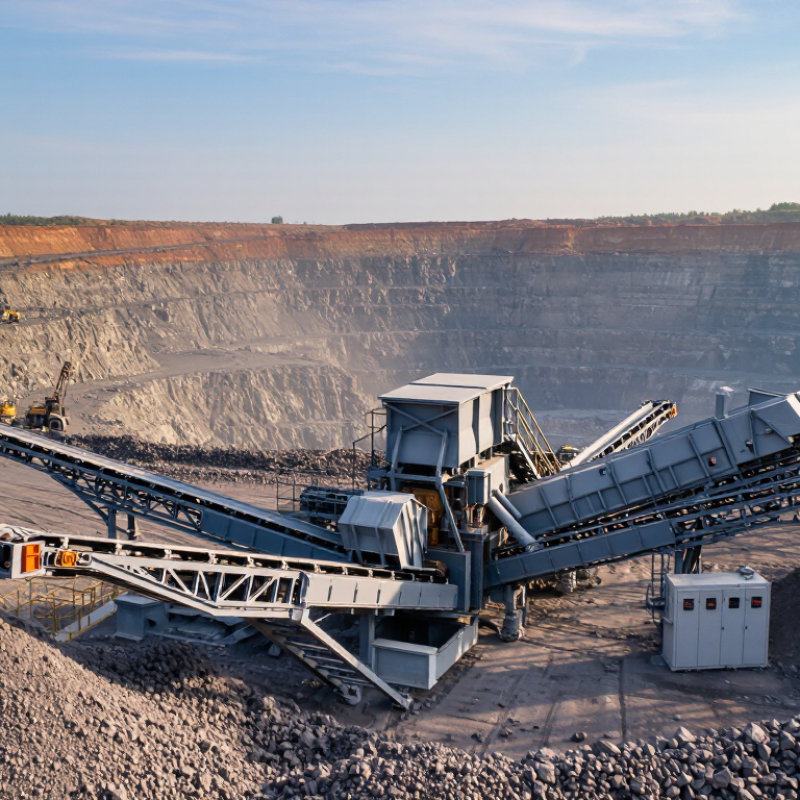
Secondary crushers reduce material after primary crushing, preparing it for screening, shaping, or final processing. Cone crushers suit hard, abrasive rock because compression occurs between a mantle and concave. They deliver consistent cubical output when the closed-side setting remains stable. Impact crushers use high-speed blow bars and impact plates. They work well with softer stone and can improve particle shape, but wear rises sharply with abrasive feed.
Hammer crushers offer strong reduction with repeated impact. They are useful for less abrasive, relatively dry materials. Roll crushers use controlled compression and shear, often producing a narrower size range with fewer fines. Choosing the right type depends on feed size, moisture, hardness, and the required product curve. It sounds simple. It is not.
The U.S. Geological Survey reported approximately 1.5 billion metric tons of crushed stone production in 2023, showing the scale of material handled across construction markets. Its Mineral Commodity Summaries 2024 also highlights aggregates as essential inputs for roads, concrete, and infrastructure. At this volume, a small setting error can create significant waste. Operators should monitor power draw, vibration, liner wear, and product gradation during each shift. A practical caveat remains: laboratory tests cannot perfectly reproduce every quarry condition. Real feed changes. Dust, wet pockets, and unexpected oversize can challenge even a carefully selected machine.
Evaluating global crusher manufacturers requires more than comparing purchase prices. The USGS Mineral Commodity Summaries 2024 estimates that the United States produced about 1.5 billion metric tons of crushed stone in 2023. That volume exposes weak designs quickly. Buyers should request documented throughput, feed-size limits, product gradation, and continuous-duty test results. Ask for figures from material similar to your own rock. Laboratory numbers can look impressive.
Energy use deserves equal attention. The International Energy Agency identifies heavy industry as a major source of global energy demand, making efficient equipment a practical procurement concern. Compare kilowatt-hours per processed tonne, not motor size alone. Check liner life, chamber access, dust controls, and the time needed for routine replacement. The safest supplier usually provides maintenance records, failure statistics, and spare-parts lead times. Sales brochures rarely show the difficult shift.
Independent verification matters. Require references from quarries operating in comparable climates, including dusty sites, freezing conditions, or remote locations. Review factory quality systems, welding procedures, inspection records, and operator training. A 2023 World Bank Logistics Performance Index can also support a supplier’s delivery-risk assessment, especially where ports and inland transport are unreliable. One weakness remains: published performance data are not always measured consistently. Buyers should insist on common test conditions, third-party checks, and clear warranty terms before signing. Cost models should include downtime, wear parts, energy, freight, and local technical support. The cheapest quotation may become the most expensive machine.
Secondary crusher manufacturers differ by region because quarry conditions, infrastructure, and service expectations are not the same. North American suppliers often focus on robust cone and impact crushers for large aggregate operations. Their equipment commonly supports automated gap control, remote monitoring, and quick liner changes. Buyers should check local parts availability before selecting a machine.
European manufacturers are widely associated with energy-efficient designs, precise process control, and strict manufacturing documentation. Many suppliers provide compact units for urban recycling sites, where noise, dust, and limited space matter. In Asia-Pacific, manufacturers serve diverse markets, from hard rock mines to fast-growing construction projects. Their product ranges may include mobile secondary crushers, modular plants, and customized chamber configurations. Site visits can reveal more than brochures.
Latin American suppliers often emphasize durable equipment and practical maintenance in remote quarry locations. Regional dealers may provide field technicians, rental support, and stocked wear parts. In the Middle East and Africa, manufacturers frequently adapt crushers for high temperatures, abrasive feed, and long transport distances. These conditions make cooling systems, lubrication protection, and service training important.
Performance figures need careful review. A stated capacity may change with feed moisture, rock hardness, and operator settings. I have seen purchasing decisions rely too heavily on ideal laboratory data. That approach can create avoidable downtime. A reliable comparison should include test results, warranty terms, installation records, and realistic maintenance costs. Supplier reputation matters, but verified field performance matters more.
Secondary crusher suppliers now compete on more than equipment capacity. Buyers need stable reduction, quick maintenance, and clear process data. The USGS Mineral Commodity Summaries 2024 reported about 1.5 billion metric tons of crushed stone produced in the United States during 2023. Such volume demands reliable machines, not attractive brochures.
Strong suppliers provide application testing before quotation. They inspect feed size, moisture, abrasiveness, and target gradation. A practical proposal may compare cone, impact, or roll configurations. It should also specify chamber geometry, liner materials, motor power, and expected wear rates. Customization matters at the discharge point. Adjustable settings, automated gap control, dust suppression, and compact platforms can suit different plants. Remote diagnostics help technicians identify vibration or bearing temperature changes early. The service plan should include commissioning, operator training, spare-part mapping, and response times. Small details matter.
The IEA’s Global Critical Minerals Outlook 2024 reported lithium demand rising by about 30% in 2023, while several other energy minerals grew by 8–15%. This pressure encourages suppliers to adapt crushers for harder, more abrasive ores. However, performance claims can be optimistic. Actual results depend on geology, feeding discipline, and maintenance quality. Buyers should request site references, test reports, energy data, and measured product curves. A supplier that explains limitations may be more dependable than one promising universal performance. Supplier capabilities deserve verification, not assumption.
Typical reduction-ratio ranges by secondary-crusher type, reflecting common equipment capabilities used in mining, quarrying, and aggregate processing.
Cone crushers are widely selected for controlled, consistent secondary reduction, while impact and hammer crushers can provide higher reduction ratios when feed characteristics and product-shape requirements are suitable. Actual performance depends on material hardness, feed size, moisture, chamber design, operating settings, and customized configuration.
Top Secondary Crusher Manufacturers and Suppliers Worldwide
Safety, Maintenance, and Purchasing Considerations
Choosing a secondary crusher requires more than comparing hourly capacity. In plant inspections, I have seen small design details prevent serious downtime. A clearly visible emergency stop, strong guarding, and safe access around the inspection door matter every day. Dust suppression should match the material and local working conditions. Operators also need practical training, not only a signed instruction sheet. Lockout procedures must be tested at the machine, where mistakes become visible.
Maintenance planning should begin before installation. Check liner wear, bearing temperature, vibration, belt alignment, and discharge size during each shift. Record the readings. Patterns often reveal trouble before a failure becomes expensive. Keep critical wear parts available, but avoid storing every possible component. That approach wastes space and capital. A clean work area helps technicians find oil leaks, loose bolts, and damaged guards quickly. It sounds basic. It is often neglected.
When reviewing manufacturers or suppliers, request verified capacity data for your actual feed size, hardness, moisture, and reduction target. Ask for drawings, service intervals, spare-part lead times, and installation support. Site references can reveal more than polished brochures. Compare total ownership cost, including power, wear parts, labor, and planned shutdowns. A low purchase price may hide weak technical support. I have also learned that capacity estimates can be optimistic when feed conditions change. Leave a realistic operating margin, and make the supplier explain every assumption in writing.
Comparative selection data for common secondary-crushing equipment. Actual performance depends on material properties, feed grading, moisture, liner configuration, operating practices, and plant layout.
| Crusher Type | Typical Applications | Suitable Feed Material | Typical Feed Size | Typical Product Size | Typical Reduction Ratio | Key Maintenance Requirements | Important Safety Controls | Purchasing Considerations |
|---|---|---|---|---|---|---|---|---|
| Cone Crusher | Hard-rock aggregates, mining circuits, iron ore, copper ore, and high-volume secondary crushing. | Competent, abrasive rock with low to moderate moisture. | Approximately 50–250 mm, depending on machine size and chamber design. | Approximately 10–75 mm, depending on the closed-side setting. | About 3:1 to 6:1. | Inspect liners, mantle, bowl, eccentric assembly, lubrication system, hydraulic system, and drive belts. Monitor oil temperature and vibration. | Guard all moving parts; use interlocked access doors, tramp-release protection, emergency stops, lockout/tagout, and dust suppression. | Check required capacity, chamber type, liner availability, automation, power demand, service support, and total operating cost. |
| Horizontal Shaft Impact Crusher | Recycled concrete, limestone, demolition material, and applications requiring good particle shape. | Soft to medium-hard, non-abrasive or moderately abrasive materials. | Approximately 100–400 mm, subject to rotor diameter and feed opening. | Approximately 10–80 mm. | About 10:1 to 20:1. | Check blow bars, impact aprons, rotor wear, bearings, drive components, chamber buildup, and balancing. Replace wear parts before excessive rotor damage occurs. | Use guarded inspection doors, rotor locking devices, foreign-object protection, dust control, and strict isolation procedures before opening the chamber. | Evaluate abrasion resistance, maximum allowable feed, tramp-metal protection, blow-bar cost, product shape, and recirculating-load requirements. |
| Vertical Shaft Impact Crusher | Manufactured sand, cubical aggregate shaping, railway ballast, and final-stage rock-on-rock crushing. | Clean, dry, moderately abrasive rock; commonly used with controlled feed grading. | Generally up to 50–100 mm, depending on rotor configuration. | Typically below 25 mm, with a high proportion of cubical particles. | About 4:1 to 8:1. | Inspect rotor tips, anvils, distributor plates, bearings, lubrication, feed tube, and internal wear surfaces. Maintain correct feed distribution and rotor balance. | Install guarding, overspeed protection, interlocks, vibration monitoring, and rotor access locking. Control airborne dust and noise. | Confirm desired particle shape, sand-production limits, rotor speed range, wear-part consumption, feed moisture, and expected fines generation. |
| Double-Roll Crusher | Coal, salt, soft limestone, gypsum, clay, and other materials requiring controlled product sizing. | Soft to medium-hard, relatively dry, low-abrasion materials. | Approximately 25–150 mm. | Approximately 3–50 mm, determined by tooth profile or roll gap. | About 3:1 to 6:1. | Inspect roll surfaces, teeth, shafts, bearings, couplings, hydraulic relief system, and scrapers. Check roll synchronization and gap settings. | Provide nip-point guarding, overload protection, pull-cord emergency stops, dust extraction, and lockout/tagout before maintenance. | Consider material hardness, moisture, roll diameter, tooth configuration, capacity, product-size control, and ease of roll replacement. |
| Hammer Crusher | Soft limestone, marl, gypsum, coal, and selected industrial minerals. | Soft to medium-hard, low-abrasion materials with limited tramp metal. | Approximately 50–300 mm. | Approximately 5–50 mm, depending on grate or outlet configuration. | About 5:1 to 15:1. | Inspect hammers, liners, grate bars, rotor, bearings, screen assemblies, and balancing. Control wear to prevent rotor imbalance and housing damage. | Use heavy-duty chamber locks, rotor restraints, impact-resistant guards, tramp-metal protection, dust extraction, and a documented isolation procedure. | Review abrasion level, moisture, hammer material, replacement time, inspection access, allowable tramp metal, and energy consumption. |
| Single-Roll Crusher | Coal handling, soft rock, petroleum coke, and applications where a compact crushing arrangement is required. | Soft to medium-hard materials, including some sticky or clay-bearing feeds. | Approximately 100–500 mm. | Approximately 25–100 mm. | About 3:1 to 6:1. | Check crushing segments, breaker plate, roll bearings, hydraulic adjustment, drive chain or gears, and scraper condition. | Guard rotating components, provide overload relief, install emergency stops, control dust, and isolate all stored hydraulic and mechanical energy. | Assess feed-stickiness tolerance, capacity, product-size range, breaker-plate adjustment, wear-segment design, and maintenance access. |
| Mineral Sizer | Coal, potash, salt, oil shale, and soft overburden in continuous mining and bulk-material systems. | Soft to medium-hard, often layered or sticky materials with controlled abrasiveness. | Approximately 300–1,000 mm, depending on machine scale. | Approximately 50–300 mm. | About 3:1 to 8:1. | Inspect sizing teeth, pick holders, shafts, gearboxes, couplings, hydraulic systems, and scraper assemblies. Check tooth clearance and drive synchronization. | Use enclosed nip-point guards, pull-wire emergency stops, overload protection, restricted access, and lockout/tagout for tooth replacement. | Verify throughput, maximum lump size, material compressive strength, moisture and clay content, tooth life, gearbox rating, and conveying integration. |
| Fine-Crushing Cone Crusher | Secondary or tertiary production of manufactured sand, fine aggregate, and mineral-processing feed. | Hard, abrasive rock and ores requiring a relatively narrow product distribution. | Approximately 25–150 mm. | Approximately 5–25 mm. | About 4:1 to 8:1. | Monitor liners, lubrication, hydraulic system, eccentricity, power draw, vibration, and wear profile. Maintain stable choke-fed operation where specified. | Install hydraulic clearing, interlocked guards, pressure and temperature alarms, emergency stops, and dust-control equipment. | Compare capacity at the required setting, product gradation, liner options, automation, power use, maintenance intervals, and spare-parts lead time. |