Top 10 Ultrafine Grinding Mills for Sale
Choosing an Ultrafine Grinding Mill is not a contest for the smallest advertised particle size. The right machine must suit the material, production target, and available operating conditions. A hard mineral behaves differently from a soft filler. Moisture, feed size, and heat sensitivity matter, too. Small details can change the result.
Dr. Barry A. Wills, a respected mineral-processing author, has written extensively about matching processing methods to material properties. A practical takeaway from his work can be put this way: “Choose the mill around the feed, not the brochure.” This is a concise paraphrase, not a verbatim quotation. It captures an important buying habit: ask for test data using your material, not just a headline capacity figure.
This guide compares ten Ultrafine Grinding Mill options for sale, focusing on their operating principles, strengths, and trade-offs. Look closely at fineness range, throughput, energy use, wear parts, and maintenance access. Picture a sample jar on the test bench, then ask how consistently the mill can produce that powder across a full shift. Ask about dust control and service support as well. Specs can look tidy. Real plants are messier. No single model suits every feed, and this comparison cannot replace a properly designed trial. Use it to narrow the field, then verify performance with your own material before making a purchase.
What Ultrafine Grinding Mills Are and What They Process
Top 10 Ultrafine Grinding Mills for Sale
What Ultrafine Grinding Mills Are and What They Process
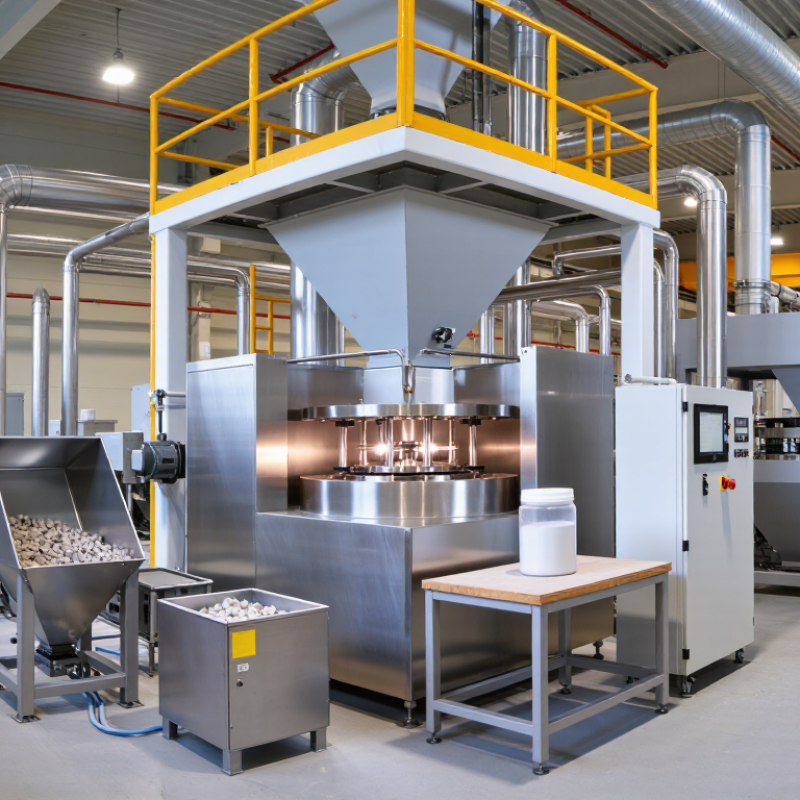
Ultrafine grinding mills reduce solid materials into very small particles, often for products that need a smooth texture or consistent performance. They use mechanisms such as impact, compression, or airflow to break particles down. The right method depends on the material, its hardness, and the desired particle size. That matters. A mill suited to soft minerals may not handle abrasive feed efficiently.
Common materials include limestone, calcium carbonate, talc, kaolin, graphite, and some industrial minerals. These powders can go into coatings, ceramics, plastics, and building products. Operators typically check feed size, moisture, throughput, and target fineness before choosing equipment. A powder may look uniform, yet still contain coarse particles. Testing a sample is more reliable than judging by appearance alone. Results can vary.
Tips: Ask for test data using your actual material, not just a similar sample. Confirm how the system controls dust, heat, and particle-size distribution. Check cleaning access and wear-part replacement time, too. Small details matter during daily operation. Don’t assume the finest setting is best; excessive grinding can waste energy and reduce output.
How Ultrafine Grinding Mills Reduce Particle Size
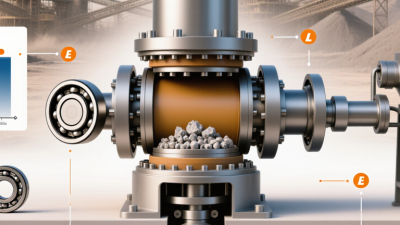
Ultrafine grinding mills reduce particle size through repeated impact, compression, and shear. Feed enters a grinding chamber, where rotating parts or moving media apply force. Coarse particles fracture; air classifiers then return oversized material for another pass. The loop continues until particles meet the target size. Small details matter. Moisture can cause powder to cling to surfaces, while excess feed may reduce contact between particles and grinding elements. Operators therefore adjust feed rate, airflow, rotor speed, and classifier settings together.
Energy use rises as the target size falls. Bond’s 1961 grinding model relates energy demand to feed and product sizes, using the Bond Work Index to account for material hardness. It helps estimate, not guarantee, mill performance. A U.S. Department of Energy cement-industry assessment, Energy Efficiency Improvement and Cost Saving Opportunities for Cement Making (2007), identifies grinding as a major electricity load, accounting for roughly half of plant electricity use. That figure applies to cement production, not every ultrafine process. Still, it highlights why trial data matters. Compare particle-size measurements, throughput, and energy use under consistent conditions. ISO 13320 describes laser diffraction methods for particle-size analysis, helping teams check whether a fine-looking powder actually meets its specification. Finer is not always better; the added energy and heat may outweigh the benefit.
Top 10 Ultrafine Grinding Mills for Sale — How Ultrafine Grinding Mills Reduce Particle Size
Grinding reduces material size in stages. This illustrative example shows a feed particle diameter decreasing from 500 μm to a 5 μm ultrafine product. Actual results depend on the material, mill design, and operating conditions.
The Main Types of Ultrafine Mills Available for Sale
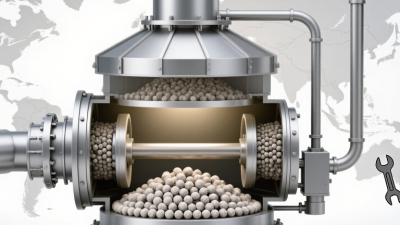
Ultrafine mills use different forces to reduce particles, so the right choice depends on the material and target size. Jet mills accelerate particles through high-speed air. They suit heat-sensitive or contamination-sensitive materials, but compressed-air use can raise operating costs. Stirred-media mills grind particles with small beads inside a rotating chamber. They offer fine, consistent output for many mineral and ceramic slurries. Wear matters.
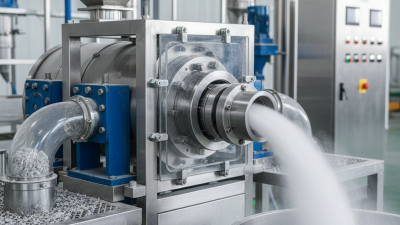
Impact and air-classifier mills combine fast-moving rotors with particle separation. They can handle dry powders and adjust product fineness through classifier settings. Ring-roller mills apply pressure and rolling action, making them a practical option for larger, steady workloads. Vibration mills use repeated impacts and can achieve very fine grinding, though noise and maintenance deserve attention. No mill fits every feed.
Tips: Ask for a test using your actual material. Check feed size, moisture, heat rise, wear parts, and dust collection. Compare finished-powder samples, not just advertised fineness. A small trial may reveal awkward cleaning or uneven output—details that brochures often miss.
Top 10 Ultrafine Grinding Mills: Features and Applications
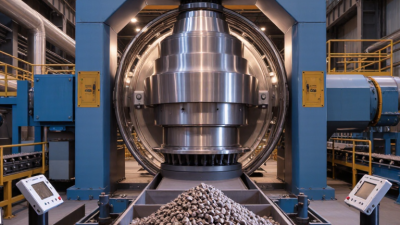
Ultrafine mills differ in how they apply force, control heat, and separate finished particles. High-pressure roller and vertical roller mills handle large mineral or cement streams; stirred-media and bead mills suit wet, narrow-size grinding. Jet mills use fast gas streams for heat-sensitive powders, while planetary ball and vibration mills serve smaller, intensive batches. Pin and impact mills offer simple, high-throughput size reduction. Classifier-integrated air mills return coarse particles for another pass. Cryogenic mills keep heat-sensitive materials cool, but add operating complexity.
Applications range from cement and ceramic powders to pigments, minerals, and battery materials. The USGS Mineral Commodity Summaries 2024 estimated U.S. cement production at about 91 million metric tons in 2023, showing the scale of a major powder-processing market. That figure does not measure ultrafine-mill demand, though; it is useful context, not proof of a specific machine’s performance. Buyers should compare target particle size, throughput, moisture, contamination risk, and energy use under real feed conditions.
Fine powder can look impressive. It is not automatically better. I would treat fineness alone as success only after testing how the powder behaves in its final application.
How to Compare Mills and Choose the Right Model
Compare ultrafine grinding mills by testing the same feed material under the same conditions. Record particle-size distribution, throughput, specific energy use, and product temperature. A finer average size can hide a broad coarse tail. Ask suppliers for test data, not just catalogue capacity.
The U.S. Department of Energy’s 2007 Mining Industry Energy Bandwidth Study estimated U.S. mining energy use at about 1.1 quadrillion Btu in 2002. That figure covers the wider mining sector, not mills alone, but it shows why energy per tonne deserves close attention. Request a Bond work index or other suitable grindability test, then compare measured kilowatt-hours per tonne at your target fineness. Check wear-part life and maintenance access, too. Small details matter.
A tiny test batch can mislead. Feed moisture, hardness, and temperature may shift during full-scale production. Compare quoted capacities only when feed size and target particle size match. Ask how the mill handles heat-sensitive material, and inspect the proposed dust-control and sampling points. I would also question unusually precise savings claims without an independent test protocol. The right model is the one that meets your product specification reliably, not simply the one with the smallest advertised particle size.