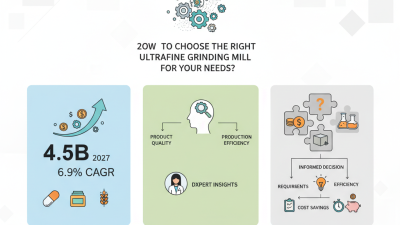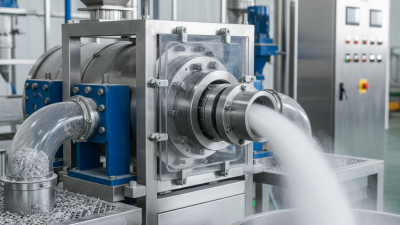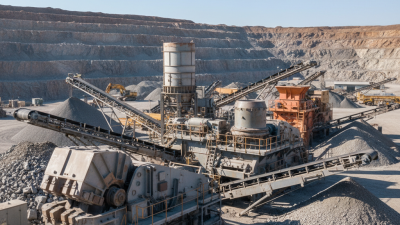
The Ultrafine Grinding Mill is a valuable asset for modern businesses. This advanced technology offers numerous benefits that streamline operations. It enhances efficiency and productivity, making it a game-changer in various industries. Businesses can reduce costs significantly by improving material processing.
This mill is not just about size reduction; it creates finer and more homogeneous products. The precision involved can lead to higher quality output. As industries demand more specialized materials, the Ultrafine Grinding Mill ensures that companies stay competitive. However, businesses must also consider the initial investment and maintenance challenges.
Navigating these complexities requires expertise. The choice of equipment can directly impact profitability. Understanding the benefits and potential pitfalls of the Ultrafine Grinding Mill helps businesses make informed decisions. Embracing this technology can provide substantial advantages in today's fast-paced market.
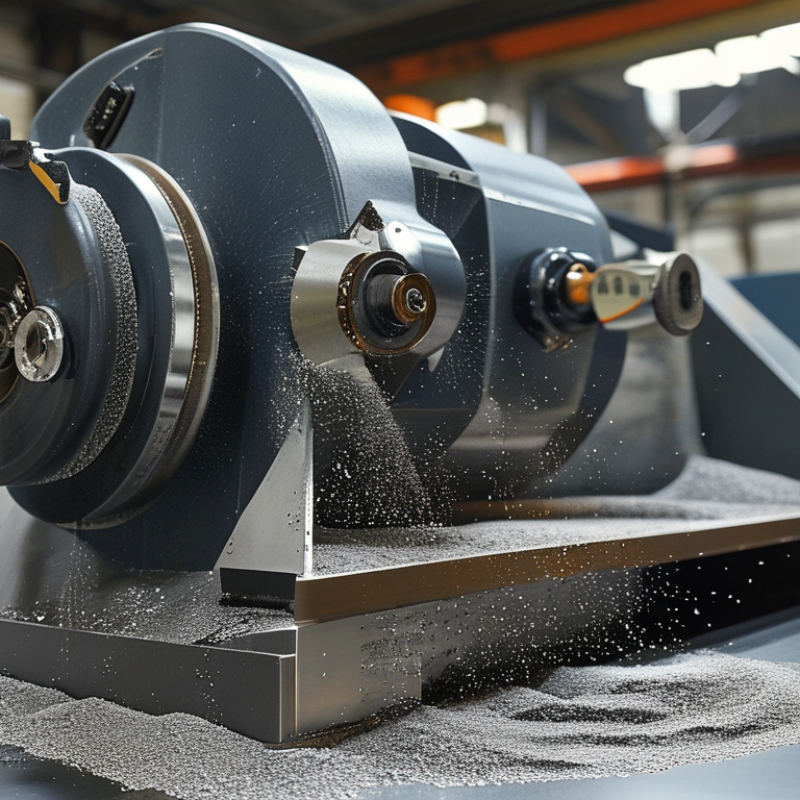
Ultrafine grinding mills have gained attention for their ability to reduce particles to extremely fine sizes. This technology offers substantial advantages for various industries, including pharmaceuticals, food, and materials science. Enhanced particle size reduction leads to improved product properties. Smaller particles often result in better solubility and absorption, critical for the pharmaceutical sector.
When using ultrafine grinding mills, businesses can achieve a consistent particle size distribution. This consistency is essential for maintaining quality and performance in product formulations. However, achieving the optimal particle size can sometimes be a challenge. Factors like feedstock type, moisture content, and equipment settings play a significant role in the milling process. Each aspect requires careful consideration to avoid inconsistencies.
The ability to manipulate particle size enhances product functionality. For example, finer particles can increase surface area, improving reaction rates in chemical processes. However, operators may encounter difficulties in managing particle agglomeration. Balancing the need for fine particles with the risk of clumping is crucial. Continuous monitoring and adjustments are necessary for optimal outcomes.
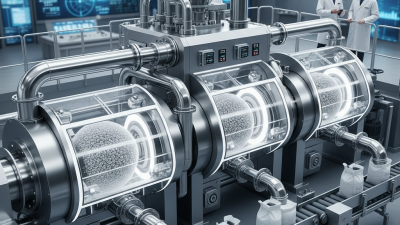
Ultrafine grinding mills offer a revolutionary advance in precision grinding techniques. Businesses can enjoy dramatically improved product quality. Fine particles enhance dissolution rates and bioavailability. This is crucial for industries like pharmaceuticals and food production. With better particle size distribution, products achieve more consistent performance.
Moreover, ultrafine grinding allows for better control over texture and flavor. For example, in the food industry, achieving the right particle size can transform a product's taste and mouthfeel. However, businesses must consider the cost versus benefits of investing in this technology.
When implementing ultrafine grinding, the learning curve can be steep. Operators need specialized training to maximize efficiency. Some may find initial results less than perfect. Regular adjustments are necessary. Each process is unique, and what works for one material may not for another. This variability requires ongoing refinement and testing. Emphasizing quality can lead to long-term success and customer satisfaction.
Ultrafine grinding mills offer significant cost efficiency and resource optimization in manufacturing processes. These mills achieve a finer particle size, which enhances the effectiveness of various materials. By reducing energy consumption, companies can lower their operational costs. This helps businesses stay competitive in a challenging market.
Moreover, ultrafine grinding allows for waste reduction. Smaller particle sizes lead to higher yields, maximizing the use of raw materials. For instance, when processing minerals, finer grinding may extract more valuable components that would otherwise go unnoticed. However, careful monitoring is needed to prevent over-grinding, which can generate unnecessary expenses.
Training staff to handle ultrafine grinding technology is also crucial. Skilled operators can optimize the grinding process, ensuring consistent product quality. Yet, challenges persist. There can be a learning curve, and initial investments in equipment may be substantial. Companies must assess their capabilities before committing. Balancing automation and manual oversight is key to achieving the best results.
Ultrafine grinding mills have gained traction across various sectors. Their ability to create fine particles enhances product quality significantly. In industries like pharmaceuticals, the demand for consistent particle size is critical. Ultrafine grinding helps achieve the desired bioavailability of active ingredients.
In food processing, these mills improve texture and flavor. For example, ultrafine grinding can create smooth sauces or powdered spices with intense flavors. The versatility extends to materials like minerals and polymers. Fine-tuning the particle size can lead to better performance in applications. However, operating these mills requires expertise. Adjusting parameters can greatly impact the final product's quality.
Even with their benefits, challenges remain. Not all materials respond the same way to ultrafine grinding. Some require specific conditions or additional processes. Trial and error may be necessary to perfect the grinding process. This highlights the importance of experience in optimizing outcomes. It's crucial to understand the material characteristics and the grinding environment to achieve the best results.
Ultrafine grinding technologies bring significant environmental benefits to various industries. They enhance material efficiency by producing finer particles, leading to more efficient use of raw materials. This process reduces waste, which is crucial for sustainability. Smaller particle sizes also increase the surface area, improving reactivity and allowing for better utilization of resources.
Energy consumption is an important consideration. Ultrafine grinding mills can operate at lower energy levels compared to traditional milling methods. This reduction can lead to lower carbon emissions. However, it is essential to evaluate the entire lifecycle of the equipment. Manufacturing and maintenance impacts must also be considered to gauge overall sustainability.
Moreover, noise pollution is a concern in many milling operations. Ultrafine grinding technologies often produce less noise, benefiting workers and surrounding communities. Yet, transitioning to new technologies requires careful planning and employee training. Not all facilities may adapt easily, and some resistance to change can occur. Balancing technological advancement with practical implementation is vital for achieving lasting environmental improvements.
| Benefit | Description | Environmental Impact |
|---|---|---|
| Energy Efficiency | Reduces energy consumption compared to traditional grinding methods. | Lower carbon footprint from reduced energy use. |
| Material Utilization | Maximizes the output from raw materials with minimal waste. | Decreases landfill waste and promotes recycling. |
| Reduced Emissions | Controls dust and other emissions during the grinding process. | Improves air quality and reduces health hazards. |
| Lower Water Usage | Minimizes the amount of water required for cooling and processing. | Conserves water resources and protects aquatic ecosystems. |
| Enhanced Product Quality | Produces finer and more consistent particle sizes. | Promotes sustainable practices through optimized product performance. |
| Reduction in Chemical Use | Decreases the need for additives and chemicals in processing. | Minimizes chemical pollution and enhances safety. |
| Sustainability | Supports sustainable practices and eco-friendly operations. | Encourages a circular economy through efficient resource use. |
| Improved Product Shelf Life | Enhances the longevity of products by ensuring uniformity. | Reduces waste from expired products. |
| Economic Savings | Lowers operational costs through efficient processes. | Supports environmental initiatives by reducing costs. |
| Innovation in Technology | Encourages the development of new, eco-friendly grinding technologies. | Promotes advancements that benefit the environment. |