How to Choose the Right Ultrafine Ball Mill
Choosing an Ultrafine Ball Mill is not simply a matter of selecting the machine with the smallest advertised output. The right choice depends on the feed material, target particle size, production rate, and final product requirements. A hard mineral may need different grinding conditions from a soft powder. Even a modest change in feed moisture can affect flow and milling performance.
Mineral-processing authority Dr. Alban Lynch has written extensively about grinding and comminution. Since no verifiable quotation from him on ultrafine ball mills was provided, the line below is an editorial takeaway, not a direct quote: “Match the mill to the material and the product you need.” That distinction matters. Reliable equipment decisions should rest on documented test results, clear specifications, and operating data—not an unattributed quote or a brochure claim.
This guide examines the practical checks behind a sound selection: feed size, achievable fineness, capacity, energy use, wear parts, and classification needs. Look closely at the details. A trial run with representative material can reveal whether the powder stays uniform, whether heat builds up, and how often components need attention. Those results may challenge an initial preference. That is useful. No single Ultrafine Ball Mill suits every application, and a careful comparison can prevent an expensive mismatch.
Understand What an Ultrafine Ball Mill Does
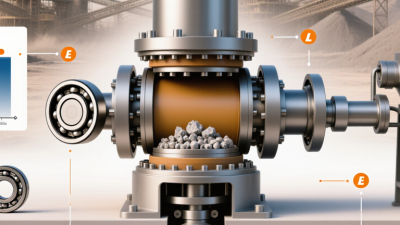
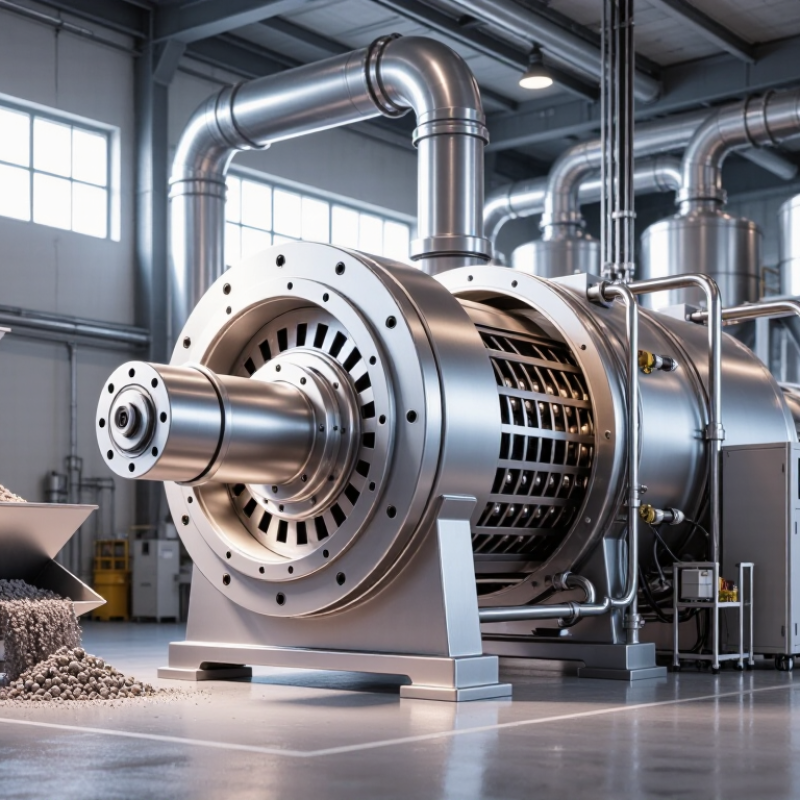
An ultrafine ball mill reduces mineral particles through repeated impact and attrition between moving grinding media. Unlike a standard mill, it is designed to produce much finer material, often measured in micrometres. The result depends on feed size, hardness, slurry conditions, media size, and residence time. Small changes matter. A coarse feed or overloaded mill can leave a broad particle-size distribution, even when the average size looks acceptable.
The scale of energy use deserves attention. A 2016 review in Minerals Engineering reported that comminution consumes an estimated 3–4% of global electricity, though figures vary by method and industry. This is why mill selection should consider both fineness and energy per tonne, not just motor power. A practical test compares feed and product samples, records throughput, and checks for heat, wear, and oversized particles. The test may expose an awkward truth: the finest setting is not always the useful one. Product requirements should guide the target size, with classification and recirculation considered alongside the mill. U.S. Department of Energy’s 2007 Mining Industry Energy Bandwidth Study also identifies grinding as a major energy-use area in mining. Use trial data before scaling up; laboratory results do not always transfer neatly to a full production line.
How to Choose the Right Ultrafine Ball Mill: Understand What It Does
An ultrafine ball mill reduces solid particles through repeated impact and abrasion between the grinding media and the material. Use the target product size—not the mill’s name alone—to guide selection. These values are approximate size benchmarks, not guaranteed mill outputs; achievable fineness depends on the material, feed size, grinding conditions, and classification system. “Ultrafine” definitions vary by industry, but often refer to particles below about 10 micrometers.
Identify the Material and Target Particle Size
How to Choose the Right Ultrafine Ball Mill
Identify the Material and Target Particle Size
Start with the material, not the machine specification sheet. Note its hardness, feed size, moisture, and abrasiveness. A dry, brittle mineral behaves differently from a soft material that smears or clumps. Small details matter. Even slight moisture can encourage sticking and change how evenly the mill processes the feed.
Define “ultrafine” with a measurable target. Specify the desired particle-size distribution, including D50 and, where important, the upper-size limit. A D50 alone does not show whether coarse particles remain in the product. Think about the next process, too: coating may need a narrow distribution, while other applications may tolerate a broader one. That sounds straightforward, but targets are often vague at the start.
Ask for test results using a representative sample, not just a similar material. Compare product size, throughput, energy use, and contamination from grinding media. Hard or abrasive feed may wear media faster; sensitive products may need stricter contamination controls. Keep some room for revision. Lab tests rarely capture every production condition, and a first estimate can be wrong. A short pilot run can reveal sticking, heat buildup, or a particle distribution that misses the real requirement.
Compare Mill Types and Grinding Media
Choosing an ultrafine ball mill starts with the required particle size and the material’s hardness. A tumbling ball mill is practical for robust, continuous duty, while a stirred-media mill often suits finer products and shorter residence times. Compare actual trial results, not catalog capacity: record throughput, product-size distribution, temperature, and energy use in kilowatt-hours per tonne. The U.S. Department of Energy’s 2007 Mining Industry Energy Bandwidth Study identifies crushing and grinding as major mining energy uses, making site-specific energy measurements essential.
Media choice changes both wear and product quality. Steel media can deliver strong impact for hard feeds, but may add iron contamination. Ceramic media can reduce that risk, though brittle media may chip under unsuitable operating conditions. Smaller media provide more contact points for fine grinding; larger media can help break coarser particles. Match media size and material to feed hardness, target fineness, and contamination limits. Test a small sample first. Measure media wear and inspect the powder for unwanted metal or ceramic fragments.
Tips: Keep feed size and moisture consistent during trials. Compare at least two media sizes, and log the mill speed, temperature, and final particle size. Results can still vary with scale-up, so leave room for another test.
Evaluate Capacity, Energy Use, and Operating Conditions
Capacity should be judged against the material you will actually grind, not a catalog figure alone. Feed hardness, starting size, moisture, and target fineness all affect throughput. A mill that handles coarse, dry feed may slow sharply when the feed is damp or the product specification is tighter. Measure carefully. Ask for test results using a representative sample, and compare the expected output with your daily production needs. Leave room for normal variation; a line sized exactly to its best test run can become a bottleneck.
Energy use deserves the same practical check. Compare kilowatt-hours per ton at your required fineness, rather than relying only on motor power. Higher speed or longer residence time may improve grinding, but can also raise energy use and wear. Small details matter. Review operating conditions such as feed consistency, ventilation, media loading, and expected maintenance access. Fine powder can build up in transfer points, while changing moisture may affect flow and separation. Confirm that temperature and dust controls suit the material and site. Results from a laboratory trial are useful, but they rarely capture every plant condition. Treat them as a starting point, then verify performance during commissioning and adjust settings as operating data accumulates.
Select a Mill and Verify Its Performance Specifications
Choosing an ultrafine ball mill starts with the material, not the headline particle size.
Define your target size range and required output per hour. Feed hardness, moisture, and particle size can change both capacity and energy use. A mill tested on a dry, soft sample may perform differently with your actual feed. Small details matter.
Ask for performance data under conditions close to your process. Check the particle-size distribution, including D50 and D90, rather than relying on a single “fine” rating. Confirm how the sample was collected and measured. Review motor power, cooling needs, grinding media, and any risk of contamination. Request a trial using representative material when possible. A specification sheet is useful, but it cannot answer every operating question.
Tips: Record feed size, moisture, test duration, and output rate during trials. Compare results on the same basis. If a supplier cannot explain the test conditions, pause and ask for clarification. That gap may be more revealing than an impressive fineness claim.