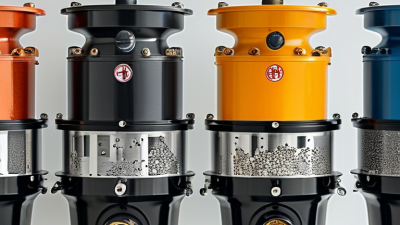
China has become an important manufacturing base for advanced powder-processing equipment. Its supply chain connects foundries, machining workshops, motor producers, and export-service teams. Among these solutions, the Ultrafine Ball Mill supports mineral, ceramic, chemical, battery, and advanced-material applications.
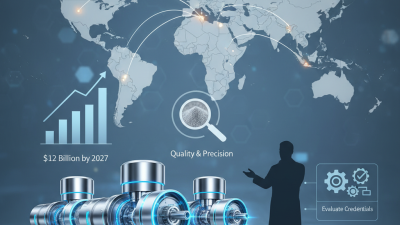
Grand View Research’s 2024 analysis of the grinding machinery market indicates continued demand for finer particle control and energy-efficient processing. Mordor Intelligence’s mineral processing equipment outlook also highlights automation, wear reduction, and higher plant productivity. These trends matter on the factory floor. A mill must deliver stable fineness, not merely impressive laboratory results. Operators notice the difference when a 20-micron target becomes 35 microns after several hours.
Fred C. Bond, a leading comminution researcher, stated, “The work input is proportional to the new crack tip length produced.” His principle still guides practical mill selection, liner design, media grading, and power calculations. A reliable Ultrafine Ball Mill manufacturer should therefore provide more than a catalogue capacity. It should explain feed size, residence time, moisture, media composition, motor load, and maintenance intervals.
Real performance is rarely perfect. Material hardness changes. Moisture fluctuates. Production teams sometimes underestimate cleaning time. Those details deserve honest discussion. China-based manufacturers and suppliers can offer competitive engineering, customization, and export support, but buyers should verify test data, quality systems, spare-parts availability, and after-sales response. This guide examines those factors closely, helping readers compare equipment with professional judgment rather than marketing language alone.
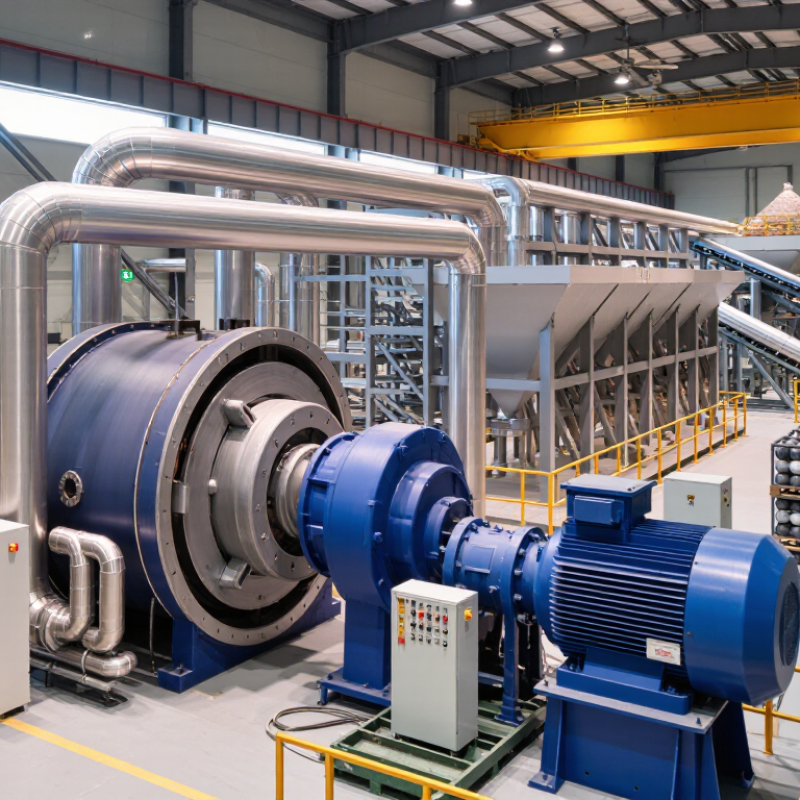
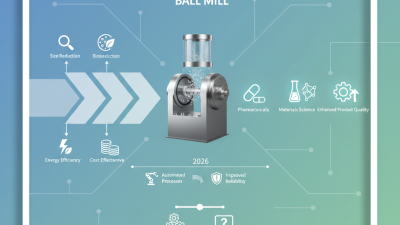
An ultrafine ball mill is a grinding machine designed to reduce minerals into very small particles. Inside a rotating cylinder, grinding media lift and drop repeatedly. This action creates impact and friction against the feed material. The final powder may support advanced processing, coating production, ceramics, and other demanding applications.
It sounds simple. Yet control is demanding. Operators monitor rotation speed, feed rate, moisture, and discharge conditions during production. A stable feed helps maintain consistent particle size. Sudden moisture changes can cause buildup inside the chamber. Worn liners may also reduce grinding efficiency and increase energy consumption. These details are easy to overlook.
An ultrafine ball mill does not make every material equally fine. Hardness, humidity, mineral structure, and residence time all influence performance. A practical evaluation should include laboratory testing and real operating data. Measuring only the final fineness can be misleading. Energy use and output stability matter as well. In some cases, a slightly coarser product is more economical. Clear technical records help engineers adjust the mill responsibly.
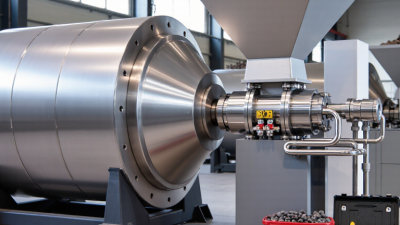
China Top Ultrafine Ball Mill Manufacturer and Supplier
How an Ultrafine Ball Mill Works
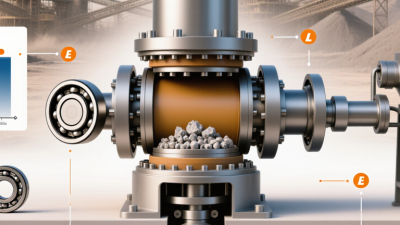
An ultrafine ball mill reduces mineral particles through repeated impact, friction, and shear. Feed enters a rotating chamber filled with small grinding media. As the chamber turns, media lift, fall, and slide across the material. Smaller media create more contact points. This helps produce particles below 10 micrometres, depending on feed hardness, speed, and residence time. A classifier can return coarse particles for another pass. The circuit becomes steadier.
The U.S. Department of Energy’s Mining Industry Energy Bandwidth Study identifies comminution as a major mining energy user. It also shows a wide gap between practical and theoretical energy performance. That gap matters. A mill may draw 200 kW yet deliver poor fineness if media loading is wrong. Operators should monitor power, product size, temperature, and vibration together. Feed moisture changes the result, too. Dry grinding can create dust and heat, while wet grinding may improve transport and cooling. In practice, laboratory tests should guide media selection before plant installation. A neat calculation can still mislead. One overlooked variable is often enough. Product quality, not motor size, should define success.
| Operating Dimension | Typical Range or Value | How It Works | Main Effect on Performance |
|---|---|---|---|
| Feed particle size | Generally below 5 mm for fine and ultrafine grinding circuits | Pre-crushed material enters the grinding chamber and is exposed to repeated impact and attrition. | Smaller feed reduces energy consumed by initial size reduction and improves mill stability. |
| Typical product fineness | Approximately 5–45 μm, depending on mill design, material, and classification | Particles are repeatedly fractured until they reach the target size; an air classifier may remove qualified particles. | A classifier helps produce a narrower particle-size distribution and limits overgrinding. |
| Grinding media diameter | Commonly about 2–20 mm, selected according to feed size and required fineness | The media transfers mechanical energy to the material through impact, compression, and rubbing. | Smaller media provide more contact points and are usually more suitable for fine grinding. |
| Grinding mechanism | Impact, compression, attrition, and shear | Rotating or agitated media collide with mineral particles and abrade their surfaces. | Multiple breakage forces support the size reduction of brittle and moderately hard materials. |
| Mill speed | Usually controlled below or around the critical-speed range in conventional tumbling operation | Speed determines whether the media cascade, cataract, or centrifuge against the mill shell. | An appropriate speed increases grinding action; excessive speed can reduce effective impact by centrifuging the media. |
| Ball filling level | Often operated within approximately 20–40% of the effective mill volume | The charge of grinding media creates the collision and friction zones required for particle breakage. | Too little media lowers grinding intensity, while excessive filling can restrict movement and increase power demand. |
| Wet or dry operation | Dry grinding uses air; wet grinding uses water or another suitable liquid | The operating medium controls flow, heat transfer, dust generation, and slurry formation. | Wet grinding can reduce dust and improve heat control; dry grinding simplifies product handling and avoids liquid separation. |
| Air classification | Optional in closed-circuit ultrafine grinding systems | Airflow carries fine particles to a classifier, while coarse particles are returned for additional grinding. | Improves product consistency, recirculates coarse particles, and reduces unnecessary residence time. |
| Residence time | Varies from minutes to longer periods according to feed properties and target fineness | Material remains in the grinding zone until it reaches the required particle size or is removed by classification. | Longer residence time may increase fineness but can also raise energy consumption and overgrinding risk. |
| Specific energy consumption | Material-dependent; increases significantly as the target product becomes finer | Energy is used to create new particle surfaces and overcome internal defects and bonding forces. | Harder materials and finer products generally require more energy per tonne of finished material. |
| Suitable material characteristics | Best suited to brittle, abrasive, or moderately hard materials | The material breaks when applied mechanical stress exceeds its fracture strength. | Moist, sticky, or highly elastic materials may require drying, additives, or a different milling technology. |
| Common applications | Mineral powders, ceramics, cement additives, pigments, fillers, and selected chemical materials | The mill converts coarse feed into controlled fine or ultrafine powder for downstream processing. | Product fineness, surface area, and distribution can be adjusted through media, speed, feed rate, and classification. |
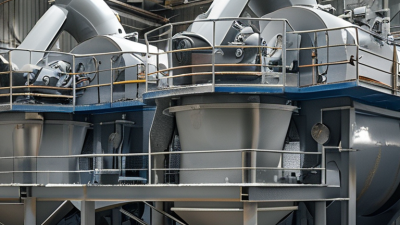
China-made ultrafine ball mills are designed for controlled grinding in minerals, chemicals, ceramics, and advanced materials. Their key strength is adjustable particle-size control. A grinding chamber uses selected liners and media to reduce feed material evenly. An integrated classifier can separate fine powder from larger particles, helping maintain consistent output. This arrangement supports stable production when moisture and feed size remain within suitable limits.
Practical users also value sealed operation, automated lubrication, and reinforced transmission systems. These features can reduce dust leakage, simplify routine servicing, and support safer workshop conditions. Many models include vibration monitoring and temperature alerts. Such details matter during long production runs. However, performance is not automatic. Incorrect media loading, excessive feed moisture, or poor calibration may reduce fineness and increase power use. In real workshops, even a small setting error can affect an entire batch.
Tips: Check feed moisture before operation. Record vibration and motor temperature daily. Inspect liners and grinding media regularly. Do not rely only on the control panel; compare readings with physical conditions. A quick manual check can reveal unusual noise, uneven discharge, or material buildup. Operators should also test final powder samples instead of assuming every cycle is identical. The design may be advanced, but process discipline still decides the result.
China Top Ultrafine Ball Mill Manufacturer and Supplier
Ultrafine ball mills serve more than mineral processing. In cement plants, they reduce clinker and supplementary materials into reactive powders. The U.S. Geological Survey estimated global cement production at 4.1 billion metric tons in 2023. This scale increases pressure to improve grinding efficiency, control residue, and reduce energy waste. Operators monitor mill temperature, media wear, and particle-size distribution during production. A small change in classifier settings can alter both output and product consistency.
Battery materials create another demanding application. The International Energy Agency reported that lithium demand rose by nearly 30% in 2023, driven largely by energy technologies. Ultrafine grinding supports the preparation of selected mineral concentrates and ceramic powders used in advanced material production. In ceramics, controlled particle sizes help produce smoother surfaces and more uniform firing. In coatings and pigments, fine dispersion can improve opacity and finish. The result is visible on a coated panel.
Food, pharmaceutical, and chemical plants also require careful powder processing. These facilities may specify narrow size ranges, low contamination, and easy cleaning between batches. Stainless contact surfaces and validated operating procedures matter. However, finer is not always better. Excessive grinding can raise heat, consume more power, and damage sensitive materials. Real production lines are messier. A practical mill selection should consider moisture, hardness, throughput, cleaning time, and laboratory test results, not particle size alone. Geological Survey and IEA data offer scale, but each plant still needs evidence from its own feedstock.
Choosing a reliable ultrafine ball mill manufacturer requires more than comparing prices. A credible supplier should provide particle-size data, throughput, power consumption, and wear-test results from similar materials. Request a laboratory sample test before signing a purchase agreement. The test should measure feed size, final D50, moisture, capacity, and energy use in kWh per tonne. These details expose claims that brochures often hide.
Energy efficiency deserves close attention. The International Energy Agency identifies industrial efficiency as a major pathway for reducing energy demand and emissions. The U.S. Department of Energy’s Industrial Decarbonization Roadmap also emphasizes efficient equipment, process control, and measurable performance. Ask suppliers to explain motor efficiency, classifier settings, cooling systems, and automatic control accuracy. A dependable manufacturer should also show ISO-certified quality procedures, traceable material certificates, inspection records, and documented factory testing. Evidence matters.
Supplier support is equally important. Check installation experience, operator training, spare-part availability, response times, and service coverage in your operating region. Speak with at least two existing users, preferably in mineral, chemical, or advanced material processing. Their feedback may reveal noise, liner wear, maintenance delays, or unstable particle distribution. Do not trust every reference equally. Some may be carefully selected. A practical audit should include a factory visit, production-line inspection, and a review of failed-project records. Reliable suppliers can discuss weaknesses without defensive language. That is often a better sign than a perfect sales presentation.