Leave Your Message

2026 Best Mining Crusher Types for Global Buyers?

Choosing the right Mining Crusher in 2026 requires more than comparing price tags or advertised capacity. Global buyers must match equipment with rock hardness, feed size, moisture, abrasiveness, and required product shape. A quarry crushing granite needs different performance from an underground mine processing soft ore. Small details matter.

This guide examines jaw, gyratory, cone, impact, and mobile crushers through practical purchasing criteria. It considers throughput, reduction ratio, energy use, wear-part consumption, maintenance access, automation, and total ownership cost. Field experience shows that a lower purchase price can become expensive when liners wear quickly or spare parts arrive slowly. Local service coverage matters. So does operator training.

No single machine suits every mining operation. That sounds obvious, yet buyers sometimes overlook it. Laboratory tests, site inspections, and representative material samples should support every major decision. Manufacturer claims deserve careful verification against operating conditions, not blind trust. Even reliable estimates can change when feed moisture rises or blasting quality varies. This article offers a professional framework for comparing crusher types, while recognizing its limits. Production targets, regional standards, electrical conditions, and environmental requirements must be confirmed before procurement. The best choice is not always the most powerful crusher. It is the system that performs consistently, remains maintainable, and produces acceptable results over years of demanding work.
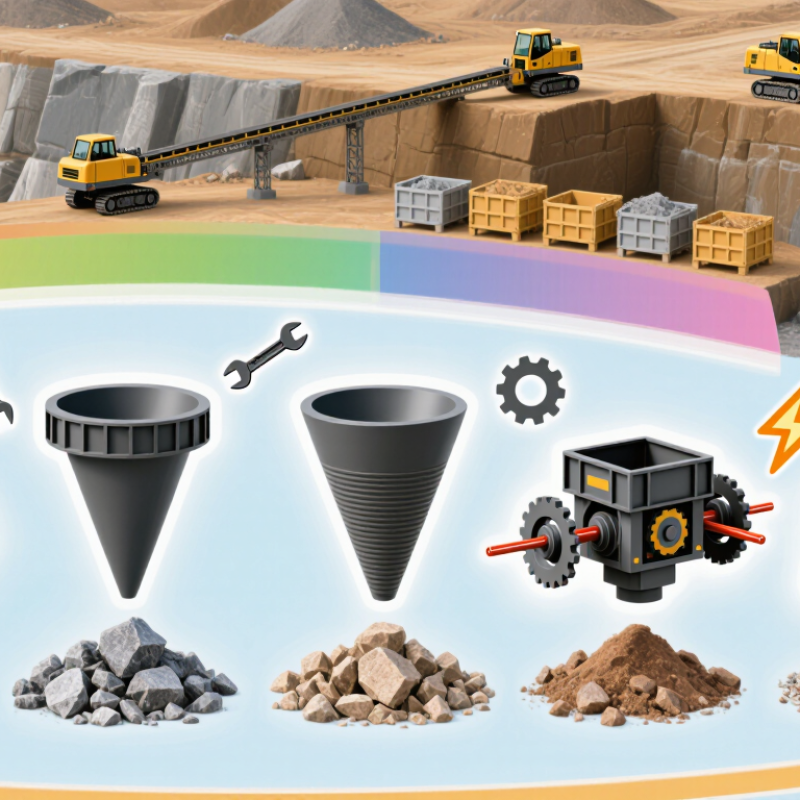
2026 Best Mining Crusher Types for Global Buyers?

What Is a Mining Crusher and Why Does It Matter in 2026?

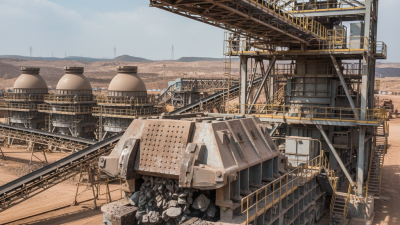
A mining crusher reduces large rocks into controlled sizes for screening, grinding, and transport. This step matters because poor crushing can increase energy use, equipment wear, and production delays. In 2026, global buyers are comparing jaw, cone, impact, gyratory, and mobile crushers. Each type suits different ore hardness, feed sizes, and site conditions. A jaw crusher handles primary breaking effectively, while a cone crusher produces more uniform material from hard rock. Mobile units can reduce hauling distances, but they may require careful planning for maintenance and relocation.

Crusher selection should begin with measured data, not attractive capacity claims. Check feed size, moisture, abrasiveness, target output, fuel or power access, and expected operating hours. Dust control and noise management also deserve attention near communities. Reliable suppliers should provide test results, service documentation, spare-parts guidance, and clear safety procedures. A perfect selection does not exist. Some buyers focus heavily on output and underestimate maintenance access, which can create expensive downtime.

Tips: Compare total operating cost, not only purchase price. Request samples or laboratory tests when ore behavior is uncertain. Inspect discharge size during trials. Leave safe working space around the crusher. Review local standards before installation. Small details matter.
2026 Best Mining Crusher Types for Global Buyers

Mining crushers are selected according to feed size, rock hardness, required product size, and plant capacity. The chart compares representative upper-end feed-size capabilities commonly used in mine-design applications.

Gyratory and jaw crushers are generally preferred for primary crushing of large run-of-mine material. Cone crushers are widely used for secondary and tertiary crushing, while impact and hammer crushers are commonly selected for softer or less abrasive materials. Values are representative engineering ranges rather than market-share data; actual performance depends on equipment design, material properties, and operating conditions.

How Major Mining Crusher Types Work and Where They Are Used

Major mining crushers differ by how they break rock. Jaw crushers compress ore between a fixed plate and a moving plate. They suit primary crushing, especially at hard-rock pits and remote sites. Gyratory crushers use a rotating mantle inside a concave shell. Their high capacity fits deep, continuous mines.

Cone crushers handle secondary and tertiary stages. An eccentric motion squeezes material into smaller, more uniform pieces. Impact crushers use sudden force from rotating blow bars. They work well with softer stone, limestone, and controlled recycling feed. Roll crushers and high-pressure grinding rolls apply pressure across a narrow gap. They can reduce excess fines in selected ore circuits.

The scale is substantial. The USGS Mineral Commodity Summaries 2025 estimated United States crushed-stone output at about 1.5 billion metric tons in 2024. This volume explains why feed size, moisture, and maintenance access matter as much as nominal capacity. A wet clay seam can choke a carefully sized jaw crusher. A worn cone can quietly increase energy use and product oversize.

Small details decide performance. Check the dump pocket, liner profile, discharge gap, and belt arrangement. Dust suppression and guarding also affect daily reliability. The International Energy Agency’s Global Critical Minerals Outlook 2024 highlights rising pressure on mineral supply chains. Efficient crushing therefore has financial and strategic value. Still, no crusher is perfect. Laboratory tests may not reproduce fractured rock, sticky fines, or sudden hardness changes underground.

How to Match Crusher Types with Ore, Rock, and Production Goals

2026 Best Mining Crusher Types for Global Buyers?

Matching a crusher to the ore matters more than choosing the largest machine. Hard granite may require a primary jaw crusher with strong compression performance. Soft limestone can often move efficiently through impact crushing. Cone crushers suit secondary reduction when the feed is abrasive and a consistent product is required.

Moist clay changes the decision. It can plug narrow openings and reduce capacity. A vibrating feeder, wider discharge area, or separate screening stage may help. For high production, compare feed size, target output, power use, liner life, and maintenance access. Field experience shows that a slightly smaller crusher can perform better when the material flow is stable. Bigger is not always better.

Tips: Test representative samples before purchase. Record moisture, hardness, lump size, and hourly tonnage. Ask engineers to check the complete crushing circuit, not one machine alone. Leave room for inspection and safe part replacement. A perfect laboratory result may fail in a dusty quarry. That possibility deserves attention.

2026 Best Mining Crusher Types for Global Buyers? - How to Match Crusher Types with Ore, Rock, and Production Goals

Crusher Type Typical Crushing Stage Best-Matched Materials Typical Maximum Feed Size Typical Reduction Ratio Typical Capacity Range Typical Product Size Key Strengths Main Limitations Recommended Production Goals
Jaw Crusher Primary Hard and abrasive ores and rocks, including granite, basalt, iron ore, copper ore, limestone, and recycled concrete Approximately 500–1,500 mm, depending on model and feed opening About 3:1 to 6:1 Approximately 10–1,500 t/h About 50–300 mm after primary crushing Simple design, high crushing force, good tolerance for blocky feed, and suitable for underground or stationary installations Produces a less consistently cubical product; high-moisture or sticky feed can cause blockage Reliable first-stage reduction of run-of-mine material and large blasted rock
Gyratory Crusher Primary Very hard, abrasive ores such as iron ore, copper ore, gold ore, and hard sulfide ore Approximately 500–1,500 mm or more, depending on equipment size About 4:1 to 7:1 Approximately 1,500–10,000+ t/h Typically 100–300 mm after primary crushing Very high continuous throughput, strong availability, and efficient handling of large feed in major mines High capital cost, large foundation requirements, and less suitable for small or low-throughput operations High-volume open-pit mining with continuous material flow and large haul-truck feed
Cone Crusher Secondary / Tertiary Hard and abrasive materials, including granite, basalt, iron ore, copper ore, gold ore, and high-quality aggregates Approximately 50–350 mm, depending on cone size and configuration About 3:1 to 6:1 per stage Approximately 50–2,000 t/h About 5–100 mm, with good control of fine products High crushing efficiency, good wear resistance, stable operation, and suitable for closed-circuit production Requires controlled feed; excessive fines, clay, or tramp metal can reduce performance or cause damage Producing consistent aggregate, ore, and manufactured-sand feed after primary crushing
Impact Crusher Primary / Secondary Soft to medium-hard limestone, dolomite, gypsum, coal, phosphate, and moderately abrasive rocks Approximately 200–1,000 mm, depending on rotor and feed opening About 10:1 to 50:1 Approximately 50–1,500 t/h About 10–80 mm with a relatively cubical shape High reduction ratio, excellent particle shape, and effective production of cubical aggregate Blow-bar and wear-part consumption increases significantly with highly abrasive or very hard feed High-reduction applications where product shape and a lower number of crushing stages are important
Vertical Shaft Impact Crusher Tertiary / Quaternary Moderately abrasive rock, manufactured sand feed, limestone, and aggregate requiring improved particle shape Approximately 30–100 mm About 4:1 to 8:1 Approximately 30–600 t/h Typically below 5 mm for manufactured sand and shaping applications Excellent cubical shaping, selective production of fines, and effective manufactured-sand processing Higher wear and energy use when processing very abrasive feed; requires controlled feed grading Final shaping, manufactured sand, and improving the quality of aggregate products
Hammer Crusher Primary / Secondary Soft to medium-hard, low-abrasion materials such as limestone, gypsum, coal, marl, and some phosphate ores Approximately 200–600 mm, depending on rotor design About 10:1 to 50:1 Approximately 5–1,000 t/h About 5–50 mm, often with a high fines percentage Compact layout, high reduction ratio, and the ability to combine crushing and partial sizing Rapid wear with abrasive feed; sticky or wet materials may obstruct grates and discharge openings Single-stage or two-stage reduction of soft, non-abrasive materials
Double Roll Crusher Primary / Secondary Coal, lignite, salt, potash, soft limestone, clay, and other low-to-medium-hardness materials Approximately 300–1,000 mm, depending on roll diameter and gap About 3:1 to 8:1 Approximately 50–2,000 t/h Commonly 25–150 mm, controlled by the roll gap Low over-crushing, predictable product size, compact design, and good performance with layered or fragile materials Not ideal for very hard, highly abrasive rock; tooth and roll-surface wear can be significant in abrasive feed Controlled sizing of coal, salt, potash, and soft minerals with limited fines generation
High-Pressure Grinding Rolls (HPGR) Tertiary / Grinding-Preconditioning Hard and competent ores including copper, gold, iron ore, diamond-bearing rock, and cement raw materials Usually up to approximately 50–75 mm in tertiary duty; larger feed is possible in specific circuits About 2:1 to 4:1 per pass Approximately 100–5,000+ t/h Typically 2–10 mm, depending on circuit and roll gap High energy efficiency, micro-cracking of particles, and potential reduction in downstream grinding energy Requires controlled feed distribution, hydraulic systems, and careful management of tramp metal and moisture Large-scale hard-rock processing where lower total comminution energy and improved leachability are priorities
Sizers Primary / Secondary Coal, lignite, oil shale, potash, salt, soft overburden, and sticky or clay-containing materials Approximately 500–1,500 mm, depending on machine size About 3:1 to 6:1 Approximately 500–10,000+ t/h About 50–300 mm, controlled by tooth profile and roll spacing High capacity, low-profile installation, low fines generation, and effective handling of damp or sticky feed Generally unsuitable for very hard, highly abrasive rock unless specially designed; tooth maintenance is required High-throughput, low-height crushing in continuous mining, mineral handling, and underground operations
Roller Crusher for Abrasive Ore Secondary / Tertiary Selected medium-hard ores and industrial minerals where a narrow product-size distribution is required Approximately 100–300 mm About 3:1 to 6:1 Approximately 20–800 t/h About 5–50 mm Controlled particle sizing, relatively low over-crushing, and suitability for closed-circuit operation Lower reduction ratio than impact machines; performance depends strongly on roll surface and feed consistency Precise secondary or tertiary sizing when product uniformity is more important than maximum reduction
Data note: Capacity, feed-size, reduction-ratio, and product-size figures are typical industry ranges rather than guaranteed specifications. Actual performance depends on ore hardness, abrasiveness, moisture, clay content, bulk density, feed gradation, chamber design, closed-circuit screening, and operating conditions.

Which Crusher Features Matter Most for Global Mining Buyers?

For global mining buyers, crusher selection should begin with site reality, not catalogue capacity. The U.S. Geological Survey reported about 22 million metric tons of mined copper production in 2024. That scale increases pressure on uptime, wear control, and consistent product sizing. A practical crusher needs stable throughput when feed moisture, hardness, and fragmentation change. Energy efficiency also matters. The International Energy Agency identifies mining as a major industrial energy user, while critical mineral demand continues rising.

Remote monitoring can reveal rising vibration, temperature, or motor load before a breakdown stops production. Easy access to wear parts reduces maintenance hours. Modular components help teams adapt to different ore bodies. Dust suppression and enclosed transfer points improve visibility and worker safety. These features often matter more than maximum headline capacity. Bigger is not always better.

Tips Ask suppliers for measured energy use, not estimates. Request references from similar ores and climates. Check local service skills, spare-part lead times, and training. A crusher that performs well in a laboratory may struggle beside a wet, abrasive pit. I have seen buyers overvalue automation and undervalue inspection access. That mistake can become expensive. Also, published recovery figures may ignore unplanned stoppages, so request full-shift operating data and maintenance records. A balanced review should compare lifecycle cost, availability, safety controls, and actual feed conditions.

How to Compare Crusher Costs, Efficiency, Maintenance, and Safety

2026 Best Mining Crusher Types for Global Buyers?

Comparing crushers starts with the material, not the price tag. A jaw crusher suits hard, abrasive rock and primary reduction. Cone crushers often produce more consistent secondary aggregates. Impact crushers can deliver excellent shaping, but wear may rise with highly abrasive feed. A practical comparison should record feed size, target output, moisture, and operating hours. For example, a 1,200-ton-per-hour plant may need different equipment than a small quarry.

Purchase cost is only one line in the budget. Calculate power consumption, wear-part replacement, labor, transport, installation, and planned downtime. Ask for measured capacity under similar feed conditions. Advertised efficiency can change sharply when rock hardness or moisture changes. I have seen low-cost equipment become expensive after repeated liner changes. That lesson is easy to ignore.

Maintenance access matters every day. Check whether technicians can reach inspection points safely and replace wear parts without excessive lifting. Review service intervals, spare-part availability, guarding, emergency stops, noise control, and dust suppression. A crusher that runs fast but creates unsafe maintenance tasks is not efficient. Keep records from actual shifts. Perfect forecasts do not exist. Leave room for mistakes, seasonal material changes, and operator training when comparing total value.