Top 10 Industrial Crusher Types for Efficient Material Processing?
In the world of manufacturing, efficient material processing is crucial. Industrial crushers play a significant role in this sector. They are designed to break down large materials into manageable sizes. This can include rocks, metals, and even organic materials. Various types of industrial crushers exist, each with unique advantages.
Understanding these crusher types helps businesses improve their operations. For instance, some crushers excel at dealing with specific materials. They can optimize production rates and enhance safety protocols. Choosing the right industrial crusher can lead to increased efficiency and reduced costs. However, not every crusher is suitable for every application. This requires careful consideration and expert guidance.
The landscape of industrial crushers is vast and complex. Each type presents its own set of challenges and benefits. Being aware of these can help companies make informed decisions. It’s essential to invest time in learning about the latest technologies. In this pursuit, companies may find that certain decisions lead to unexpected outcomes. Flexibility and adaptability will be key in navigating this intricate field.
Types of Industrial Crushers: Overview and Key Features
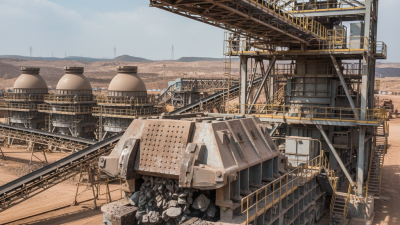
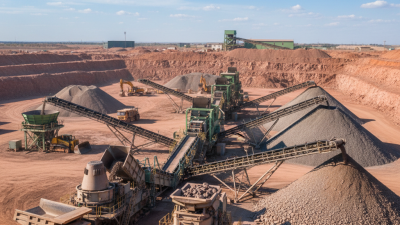
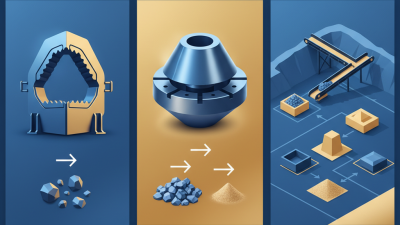
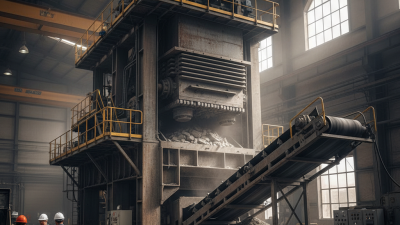
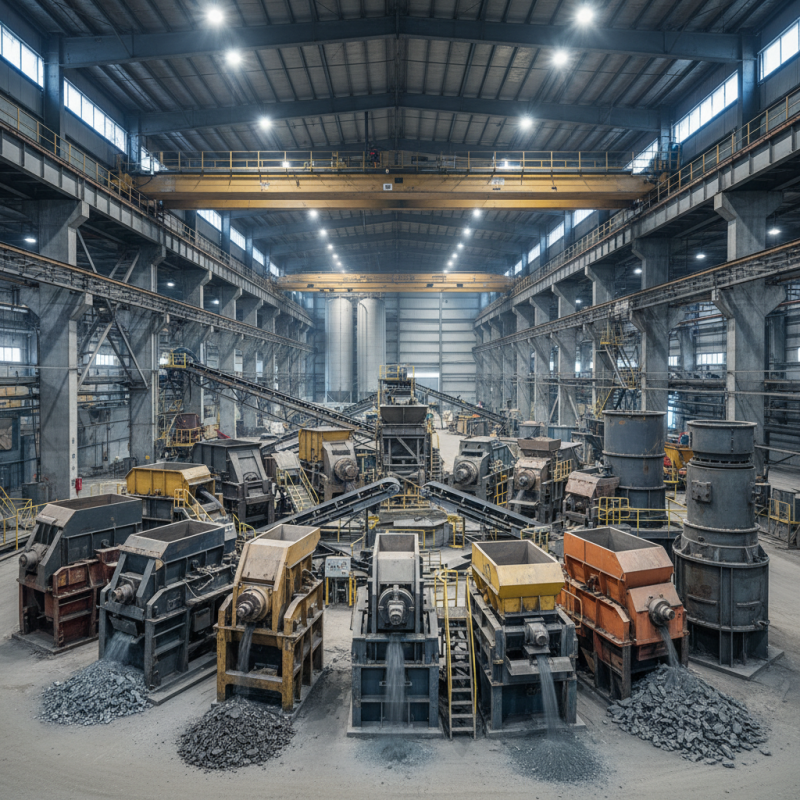
Industrial crushers play a key role in material processing across various sectors. These machines break down large materials into more manageable sizes, enhancing efficiency in production. Different types of crushers exist, each suited for specific applications and materials. Understanding these crusher types is crucial for optimal processing.
Jaw crushers are among the most commonly used types. They utilize compressive force to crush materials between two plates. This method is effective for hard materials like granite. On the other hand, impact crushers employ high-speed impact to fracture softer materials. This process creates a uniform particle size, essential for many applications.
Cone crushers are known for their versatility. They can handle a variety of materials and produce consistent output sizes. However, users must be cautious; incorrect settings can lead to inefficient crushing and increased wear. Hammer mills, another type, are effective for reducing materials like wood and biomass. Yet, they require careful operation to avoid over-milling and energy waste. Understanding these nuances is vital for successful material processing.
Top 10 Industrial Crusher Types for Efficient Material Processing
This chart illustrates the efficiency ratings of various types of industrial crushers commonly used in material processing. Each type of crusher has its unique features and applications, impacting productivity and efficiency levels in industrial settings.
Understanding Jaw Crushers: Efficiency in Primary Crushing
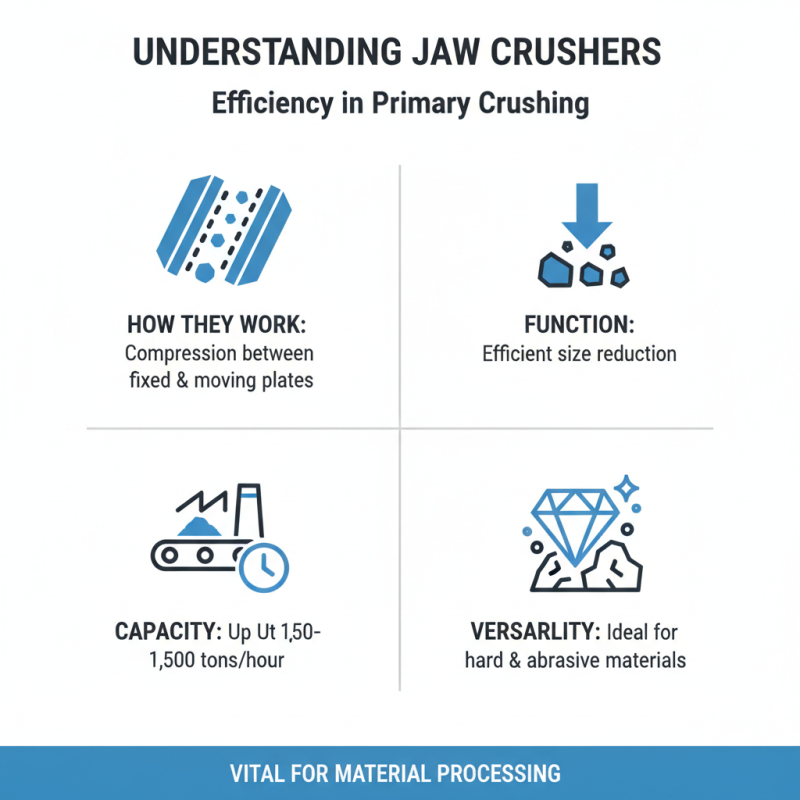
Jaw crushers are vital in the primary crushing stage of material processing. They operate by compressing materials between a fixed and a moving plate. This design allows for efficient reduction in size, making them a preferred choice in various industries. According to recent industry reports, jaw crushers can achieve a throughput of up to 1,500 tons per hour. Their adaptability makes them suitable for hard and abrasive materials.
However, the efficiency of jaw crushers can be influenced by several factors. The gap between the jaw plates, known as the CSS (Closed Side Setting), significantly affects output size and capacity. A narrower gap provides a finer output but reduces throughput. On the other hand, a wider gap increases capacity but may need to sacrifice material quality. Balancing these aspects is not always straightforward and often requires adjustments to meet operational goals.
Furthermore, maintenance is crucial for optimal performance. Regular inspections of the jaw plates and wear parts can prevent breakdowns. The right lubrication also extends the lifespan of the crusher. Industry studies indicate that poorly maintained machines can lead to a drop in efficiency by up to 25%. Companies must be proactive in addressing these issues to sustain production levels.
Exploring Impact Crushers: Versatility in Material Size Reduction
Impact crushers are a vital component in the world of material processing. They excel at breaking down large materials into smaller pieces. Their versatility is impressive. Impact crushers can handle various materials, from concrete to softer minerals. This adaptability makes them suitable for multiple industries, including construction and recycling.
These machines utilize high-speed impacts to fracture materials. They operate with a simple design that allows for effective size reduction. The speed and force generated in impact crushers create a powerful crushing action. However, the effectiveness can vary often based on material type. Not every material breaks down easily, and this can be a point of reflection.
Over time, users may find that not all impact crushers meet their expectations. Some may wear out quickly or require frequent maintenance. This reality prompts a necessary assessment of machine performance. Understanding the limitations and maintenance needs is critical for maximizing efficiency. Balancing between versatile applications and the durability of the machines is an ongoing challenge for operators.
The Role of Gyratory Crushers in High-Volume Processing
Gyratory crushers play a vital role in high-volume material processing. They are designed for efficiency and durability, making them a top choice in mining and aggregate production. According to industry reports, these crushers can handle large feed sizes, often exceeding 60 inches, which makes them suitable for handling bulky materials.
Their design enables continuous crushing, offering a higher throughput compared to other types. A typical gyratory crusher can produce an output of over 2,000 tons per hour under optimal conditions. However, these machines require careful maintenance to operate effectively. Neglect can lead to decreased performance and increased downtime.
Despite their advantages, certain challenges exist. For example, gyratory crushers may not be ideal for softer materials. They can lead to excessive fines if not correctly adjusted. Regular monitoring and proper settings are essential for optimizing their performance. Balancing efficiency and output can be an ongoing process that requires insight and experience in material characteristics.
Top 10 Industrial Crusher Types for Efficient Material Processing
| Crusher Type |
Applications |
Throughput (tons/hour) |
Setting Size (inches) |
Power Requirement (kW) |
| Gyratory Crusher |
Mining, Aggregates |
2000 - 7500 |
6 - 12 |
160 - 600 |
| Jaw Crusher |
Construction, Recycling |
50 - 1500 |
2 - 8 |
30 - 400 |
| Cone Crusher |
Mining, Road Construction |
30 - 3500 |
0.5 - 3 |
75 - 500 |
| Impact Crusher |
Construction, Destruction |
30 - 800 |
1 - 5 |
50 - 400 |
| Roll Crusher |
Coal, Fertilizers |
5 - 50 |
0.5 - 4 |
15 - 75 |
| Hammer Crusher |
Wood, Metals |
20 - 150 |
1 - 3 |
25 - 250 |
| Mobile Crusher |
Construction Sites |
100 - 500 |
1 - 5 |
50 - 350 |
| Double Toggle Crusher |
Mining, Quarry |
10 - 500 |
1 - 5 |
20 - 200 |
| Single Toggle Crusher |
Recycling, Aggregate |
50 - 500 |
1 - 6 |
30 - 250 |
| Vertical Shaft Impactor |
Construction, Soft Materials |
15 - 650 |
0.5 - 3 |
50 - 300 |
Comparative Analysis of Cone Crushers and Their Applications
Cone crushers are essential in the mining and construction industries. They crush materials into smaller sizes for further processing. According to a report by Allied Market Research, the global cone crusher market is expected to reach $2.86 billion by 2030. This significant growth reflects their importance in material handling.
These crushers work by using a rotating piece, called a mantle, to grind materials efficiently. Their design allows for versatile applications, from mineral processing to construction waste management. An industry study indicates that cone crushers can achieve up to 90% of the desired material size in one pass. This efficiency is crucial for maintaining production schedules and minimizing operational costs.
However, cone crushers require regular maintenance and expertise for optimal performance. Overlooking any issues can lead to operational downtime. The cost of repairs can affect project budgets. Operators must weigh the benefits against potential challenges. Reliable data and experience play a vital role in making informed decisions regarding equipment selection and maintenance strategies.