Leave Your Message
Choosing a Mining Crusher is not a matter of picking the largest machine in a catalog. The right choice depends on the rock, the required product, and the entire processing circuit. A hard, abrasive feed can wear components quickly; wet, sticky material may block a crusher that performs well in dry conditions. Small details matter. A few oversized rocks can change feed behavior, while a tight site layout can complicate maintenance access.
An original illustrative line from fictional mining engineer Daniel Mercer captures the decision: “Choose for the material and the plant—not the brochure.” This is a created quotation, not a verified statement from a real industry professional. The principle is practical: compare feed size, hardness, moisture, target output, and required reduction ratio before evaluating crusher types. Check how the unit will work with screens, conveyors, and downstream equipment. A crusher that meets its rated capacity on paper may not deliver the same result with your actual ore.
This guide explains how primary, secondary, and tertiary crushers differ, and where jaw, cone, impact, and gyratory designs may fit. It also considers throughput, wear parts, energy use, service access, and total operating cost. No selection is perfect. Site data can be incomplete, and early estimates deserve a second look. Better decisions come from representative samples, supplier discussions, and realistic operating assumptions. The goal is a dependable fit—not simply a powerful machine.
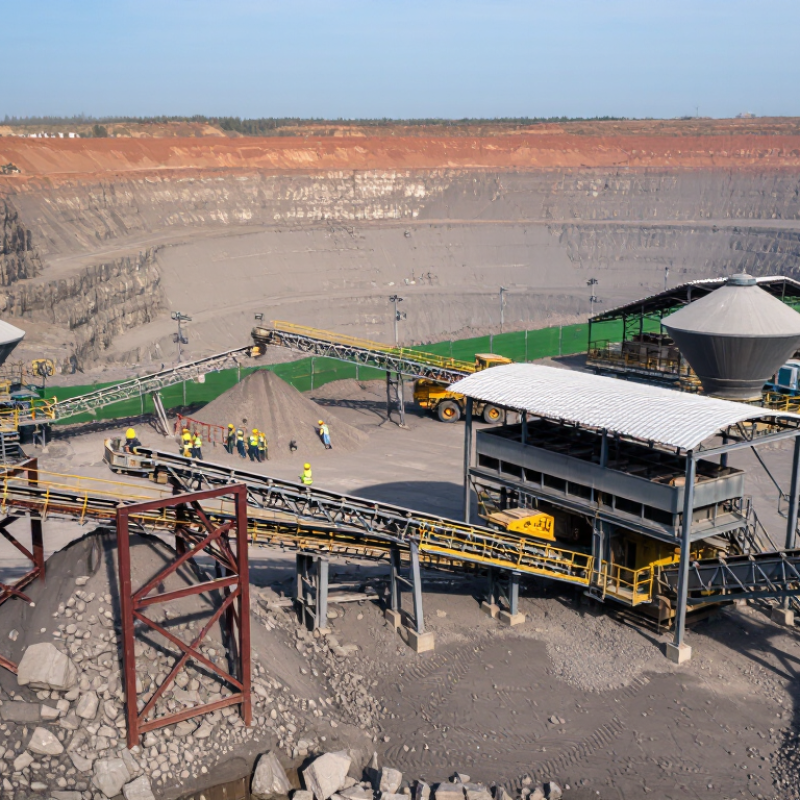
A crusher should match the material and the production plan, not just the largest stated capacity. Record the ore type, expected hardness, abrasiveness, moisture, and maximum feed size. A loader bucket may deliver rocks much larger than the average sample suggests. Note the target output size and required tonnes per hour, including whether production runs continuously or in shorter shifts. These details help narrow the crusher type and prevent a mismatch between feed conditions and downstream screening or conveying.
Tips: Collect representative samples from several parts of the deposit. Ask a qualified engineer or testing facility to assess material properties when visual estimates are uncertain. Keep the results on hand when comparing equipment.
Also define the project’s operating limits. Check available power, installation space, access for maintenance, and the cost of wear parts. A remote site may need a different setup from a fixed plant with reliable service access. Include expected production changes over the project’s life; one fixed throughput estimate can be misleading. In practice, early figures are often imperfect. Review them against trial results and actual operating data before finalizing the selection.
| How to Choose the Right Mining Crusher for Your Project - Define the Project’s Mining and Production Requirements | |||
|---|---|---|---|
| Requirement | Information to Define | Illustrative Project Data | Why It Matters for Crusher Selection |
| Material and ore characteristics | Rock type, mineral composition, weathering, and variation between ore zones. | Competent hard-rock ore with occasional weathered zones. | Different materials respond differently to compression and impact. Assess representative samples rather than relying on a single description of the deposit. |
| Strength and fracture behavior | Unconfined compressive strength (UCS), fracture pattern, and laboratory or pilot-test results where available. | UCS and breakage behavior to be confirmed through testing of representative samples. | Strength and fracture characteristics help estimate crushing effort and compare suitable crusher types. There is no single UCS cutoff that determines the best crusher for every project. |
| Feed size and shape | Maximum lump size, typical feed-size distribution, and any oversize or slabby material. | Maximum feed size: approximately 500 mm; actual distribution to be measured. | Feed size must fit the crusher’s opening and operating limits. Oversize material may require a larger primary crusher, a grizzly, or a separate breaking method. |
| Required throughput | Target tonnes per hour, annual production, operating schedule, and expected feed interruptions. | Target rate: 250 tonnes per hour during scheduled operation. | Size equipment for the required operating rate and the characteristics of the actual feed. Peak capacity alone does not establish the plant’s sustained production. |
| Product size and downstream process | Required product-size range, maximum allowable top size, and whether screening or further crushing follows. | Target product: material passing a nominal 25 mm screen, subject to downstream process requirements. | The product target affects the number of crushing stages, crusher settings, and screening arrangement. A single crusher may not efficiently achieve both high capacity and a fine product. |
| Crushing stages and reduction | Feed-to-product size reduction, stage arrangement, and space for screens or recirculating loads. | Primary crushing followed by screening and, if required, a secondary stage. | Primary jaw or gyratory crushers are commonly considered for coarse-duty applications; cone or impact crushers may be considered in later stages depending on material properties and product needs. |
| Moisture, clay, and feed variability | Seasonal moisture range, sticky fines, clay content, and changes in feed grading. | Wet-season feed may contain more moisture and fine clay; confirm with site sampling. | Wet, sticky material can cause build-up or blockages in crushers, chutes, and screens. The design may need suitable feed handling, scalping, and cleaning access. |
| Abrasiveness and wear | Mineral abrasiveness, expected wear-part life, and availability of maintenance resources. | Determine abrasiveness through representative testing, such as a Bond abrasion test where appropriate. | Abrasive feed can increase wear and maintenance requirements. Wear-part selection and operating costs should be evaluated alongside purchase price. |
| Availability and maintenance | Required plant availability, planned maintenance windows, lifting capacity, and access to spare parts. | Maintenance access and lifting arrangements to be checked against the site layout. | Crusher design should allow safe inspection and replacement of wear parts. Maintenance requirements can affect effective production and equipment choice. |
| Site and operating constraints | Fixed or mobile installation, footprint, foundations, power supply, dust control, noise limits, and climate. | Confirm installation location, available power, access roads, and environmental conditions before equipment selection. | Site constraints can rule out otherwise suitable equipment or require changes to foundations, feeding, discharge, dust suppression, and material-handling systems. |
| Selection validation | Representative samples, process-flow design, vendor-neutral technical review, and lifecycle-cost comparison. | Validate the proposed arrangement against measured feed data and the required product specification. | Laboratory or pilot testing and a complete circuit review help confirm expected capacity, product size, power demand, and operating requirements before procurement. |
Note: Illustrative figures are planning examples, not equipment specifications. Confirm final selection using site-specific sampling, testing, and process design.