2026 How to Choose the Right Industrial Crusher for Your Business Needs?
Choosing the right Industrial Crusher is crucial for any business in the manufacturing sector. According to a recent report by Market Research Future, the global industrial crusher market is expected to reach $4.82 billion by 2026, growing steadily due to increasing demand for improved infrastructure. Understanding your specific needs is essential.
An expert in the field, Dr. Emily Harmon, states, “Selecting the appropriate Industrial Crusher can make or break your production efficiency.” Her words highlight the importance of careful consideration. Different industries require different solutions. For instance, mining operations may demand more robust models, while recycling businesses might need advanced technology to handle various materials.
However, navigating the choices can be challenging. Many businesses underestimate the impact of the wrong crusher choice. Misalignment can cause costly downtime and inefficient processes. Reflecting on your unique needs can help in making a better decision. It's essential to evaluate factors like material types, production volume, and desired output.
Understanding Different Types of Industrial Crushers Available in the Market
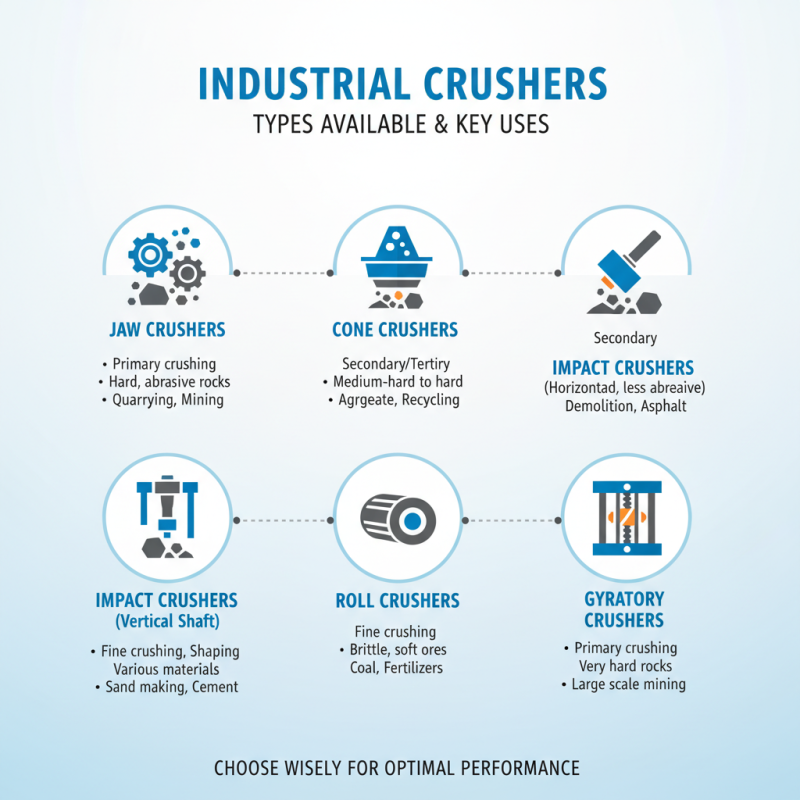
Choosing the right industrial crusher is crucial for any business. Many types are available. Understanding their differences can direct your choice effectively.
Jaw crushers are popular for their versatility. They can handle various materials, from hard rocks to soft minerals. Their powerful bite breaks down materials into manageable sizes. Yet, they might not suit every application. Always evaluate your material type.
Impact crushers, on the other hand, excel in size reduction of softer minerals. They work by throwing material against a surface. This method often creates a precise end product. However, they may wear out quickly with hard materials.
**Tip**: Assess your material's characteristics before selecting a crusher. This helps in choosing the best type for efficient processing.
Cone crushers offer a balance of grinding and crushing. They can achieve uniform particle sizes. But, their complexity might be overkill for small operations. Consider the scale of your work when selecting.
**Tip**: Don’t forget to check maintenance needs. A more complex machine may require more time and resources to keep operational.
Finally, always reflect on your production goals. Your choice can impact efficiency and costs. Take time to research and don’t rush the decision.
Key Factors to Consider When Choosing an Industrial Crusher
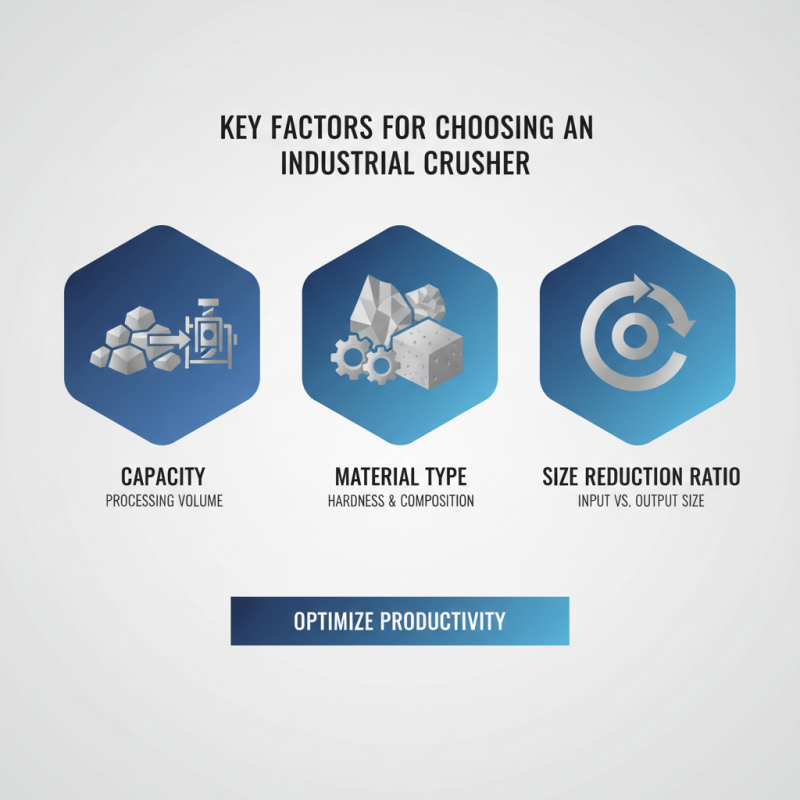
Choosing the right industrial crusher requires careful thought. You must consider several key factors such as capacity, material type, and size reduction ratio. A crusher that processes your specific materials effectively will significantly enhance productivity.
You also need to reflect on the operational efficiency of the machine. Assess the energy consumption versus output ratio. Is it cost-effective in the long run? Maintenance is another critical aspect. A machine that is too complex might lead to frequent downtime. If you’re not careful, you could end up with unnecessary complications.
Finally, think about the layout of your facility. The crusher should fit seamlessly into your existing workflow. Will it occupy too much space? Ensure it handles your materials without causing bottlenecks. Ultimately, the choice is not just about the specifications but also how it aligns with your business needs.
Assessing Material Requirements and Production Capacity
Choosing the right industrial crusher involves careful consideration of your material requirements and production capacity. Different crushers handle various materials, such as rocks, minerals, or recyclable waste.
Understanding the specific properties of the material helps in selecting the most suitable type of crusher. This can include hardness, moisture content, and size distribution.
Tips: Always test a sample of your material before making a decision. Observing the behavior of the material can reveal important details. It can also help you avoid costly mistakes later.
Production capacity is another crucial factor. Determine how much material you need to process within a specific timeframe. Consider your average daily operations and peak periods. Ensure the crusher you choose can handle these demands while maintaining efficiency.
Tips: Calculate your maximum output and see if the crusher meets it. A machine that seems perfect might fall short during heavy workloads. It’s wise to have a backup plan. Decide early on how much downtime you can tolerate. This foresight can save you from future headaches.
Evaluating Cost-Effectiveness and Budget Constraints
Choosing the right industrial crusher is crucial for any business. Evaluating cost-effectiveness should be a priority. According to a recent industry report, operational costs can vary by up to 30% based on the type of crusher selected. This means businesses must analyze their specific needs carefully.
Consider the initial investment. High-capacity crushers can cost upwards of $100,000, but cheaper options may lead to higher maintenance expenses. In fact, 65% of companies reported increased costs due to inadequate equipment. Budget constraints also limit your options. Sometimes, a less expensive crusher can provide better long-term value.
Energy efficiency is another factor. Some machines may seem affordable, but their energy consumption can be significant. Industry data indicates that energy costs can account for 15-20% of total operating expenses. This cannot be overlooked. Regular maintenance will also add to overall costs, often leading to unexpected expenses. If you are not mindful, a wrong choice can strain your finances.
2026 How to Choose the Right Industrial Crusher for Your Business Needs?
| Crusher Type |
Material Handled |
Capacity (tons/hour) |
Power Requirement (HP) |
Cost ($) |
Maintenance Frequency (months) |
Average Operating Cost ($/ton) |
| Jaw Crusher |
Minerals |
50 |
100 |
20,000 |
6 |
5 |
| Impact Crusher |
Concrete |
60 |
150 |
30,000 |
12 |
7 |
| Cone Crusher |
Granite |
40 |
200 |
25,000 |
8 |
6.5 |
| Roll Crusher |
Clay |
30 |
75 |
15,000 |
10 |
4 |
| Hammer Mill |
Wood |
25 |
50 |
10,000 |
4 |
3.5 |
Maintenance and Support: Ensuring Long-Term Operational Efficiency
Choosing the right industrial crusher is crucial for operational efficiency. Maintenance and support play a significant role in this. Regular maintenance increases the lifespan of your equipment. Neglecting upkeep can lead to costly repairs and downtime.
Implementing a scheduled maintenance plan is essential. Check for wear and tear regularly. Daily inspections help identify small issues before they escalate. This proactive approach can save money in the long run. Lack of maintenance can result in inefficiency and reduced productivity.
You may face challenges in finding reliable support. Not all service providers offer timely assistance. Evaluate potential partners carefully. Ensure they provide comprehensive support. Ask about their response times. It’s vital to have a dependable resource for technical issues. Remember, poor support can lead to operational delays and frustration.
Industrial Crusher Maintenance and Support Analysis