Leave Your Message

How to Choose the Right Primary Crusher for Your Project

Choosing a Primary Crusher is not a matter of selecting the largest machine in a catalog. The right choice depends on the material, production target, feed size, site layout, and downstream equipment. A hard, abrasive rock can wear components quickly. Wet, sticky feed may bridge or choke where a dry sample flows freely. Small details matter. So does the way material reaches the crusher.

Barry Wills, mineral-processing author and editor, is a relevant expert whose work covers crushing and mineral processing. Rather than present an unverified quotation as his, here is the guiding line for this article: “Choose for the material you will actually process, not the sample you wish you had.” It captures a practical lesson, but it is editorial wording, not a direct quote from Wills.

This guide outlines how to compare jaw, gyratory, and impact crushers against real project conditions. It considers feed characteristics, required capacity, reduction ratio, operating costs, maintenance access, and future flexibility. A crusher that meets a nameplate target may still underperform if trucks cannot feed it steadily or operators cannot reach wear parts safely. We will also look at questions to raise with suppliers and data to confirm before purchase. Some inputs will remain uncertain; early test results do not always predict a full season of production. That deserves a second look. The aim is a defensible choice, not a perfect forecast.
How to Choose the Right Primary Crusher for Your Project

What a Primary Crusher Does in a Crushing Process

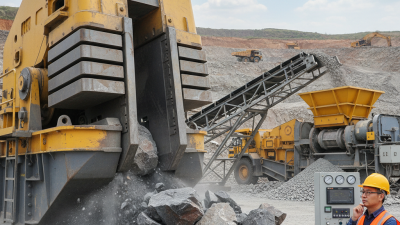
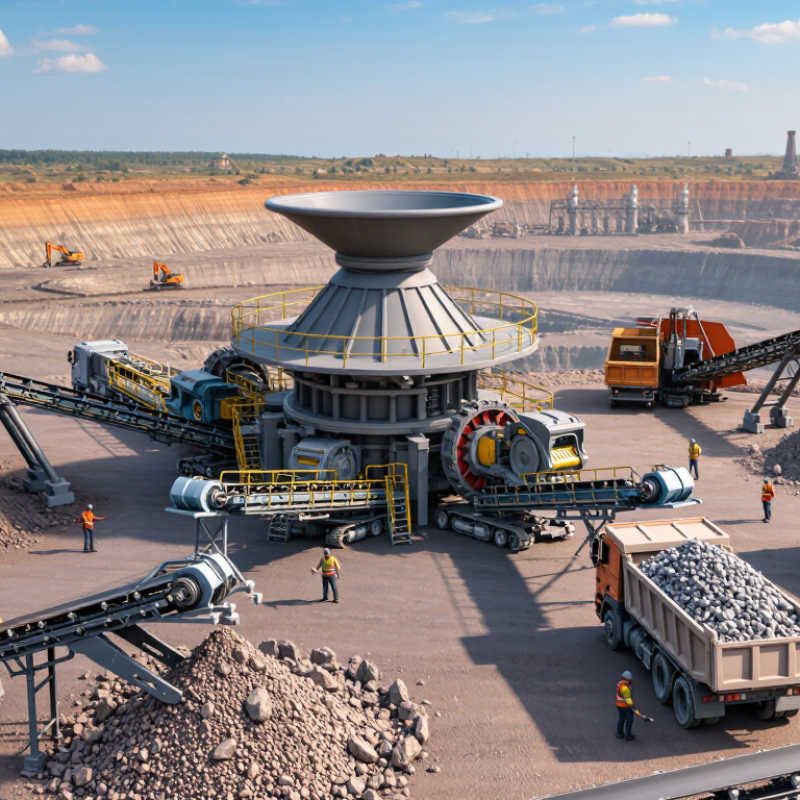
A primary crusher takes run-of-mine rock and reduces it to a size that downstream equipment can handle. It sits at the front of the crushing process, where feed may include uneven boulders, fines, and material with mixed hardness. The crusher’s job is not to produce a finished aggregate. It creates a more manageable, consistent feed for secondary crushing, screening, and conveying. That first reduction also affects plant capacity: a choke point at the primary stage can leave screens waiting or cause trucks to queue.

The US Geological Survey’s Mineral Commodity Summaries 2024 estimated U.S. crushed-stone production at about 1.5 billion tons in 2023. That scale shows why small efficiency losses matter. In practice, engineers assess the largest feed size, rock strength, abrasiveness, moisture, and required throughput before selecting a crusher type. They also check the loading method and available space; a theoretically high-capacity machine is not useful if the feed cannot reach it smoothly. Watch the product size, too. Oversized output can overload the next stage, while excessive fines may create handling problems. Details matter.

A field survey helps confirm what the geology report cannot: actual variation across the deposit. Even good estimates miss things. That is worth admitting before equipment is specified.
How to Choose the Right Primary Crusher for Your Project

What a Primary Crusher Does in a Crushing Process

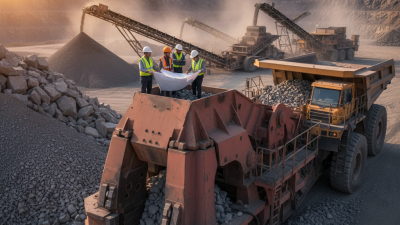
A primary crusher reduces run-of-mine material to a size that downstream equipment can handle. The ranges shown are broad, indicative examples in millimeters—not design limits. Actual feed and product sizes depend on the rock, crusher type, settings, and project requirements. Choose a primary crusher by checking feed size, required throughput, material properties, and the target product size.

How to Assess the Material and Feed Requirements

How to Choose the Right Primary Crusher for Your Project

How to Assess the Material and Feed Requirements

Start with a representative sample, not a guess from the site’s appearance. Record the largest lump size, typical feed size, moisture, clay content, and abrasiveness. A wet, sticky feed may bridge in a hopper, while hard, abrasive rock can accelerate wear. These differences affect crusher type, feed opening, operating costs, and the need for scalping or pre-screening. The U.S. Geological Survey’s Mineral Commodity Summaries 2024 estimated U.S. crushed stone production at about 1.5 billion metric tons in 2023. That scale makes careful feed assessment practical, not academic. Still, national production figures cannot predict your site’s feed conditions.

Tips: Measure several truckloads. Note the largest lumps and the share of fines. Check moisture after rain, too. A single dry-day sample can mislead.

Compare the measured feed with the crusher’s maximum feed size and required throughput. Ask the supplier to confirm capacity using your material’s bulk density, gradation, and moisture—not a generic catalogue figure. Also inspect how feed reaches the machine: uneven loading can reduce output and increase wear. If the deposit changes across the bench, test more than one sample. It takes time. But skipping this step can leave a crusher that handles the headline rock size while struggling with the material actually delivered. Keep test results and assumptions in writing, so later performance checks have a reliable baseline.

How to Compare Primary Crusher Types

How to Choose the Right Primary Crusher for Your Project

How to Compare Primary Crusher Types

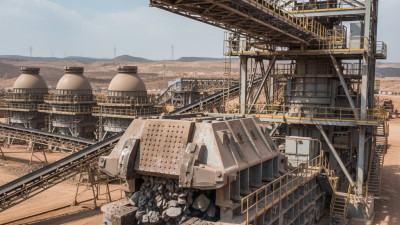
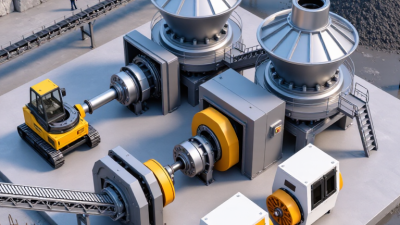
Jaw, gyratory, and impact crushers handle different feed conditions. A jaw crusher compresses rock between a fixed plate and a moving one. Its simple layout suits smaller operations and variable feed, though slabby material can cause bridging. Gyratory crushers use a rotating mantle inside a concave chamber. They often suit high-throughput plants with steady, large-volume feed. Impact crushers break rock by striking it with rotating hammers or blow bars. They can produce a more cubical product, but abrasive rock may accelerate wear. No type wins every time.

Start with the material, not the brochure. Measure the largest feed pieces, moisture, abrasiveness, and target output size. The U.S. Geological Survey’s Mineral Commodity Summaries 2024 estimated U.S. crushed-stone production at about 1.5 billion metric tons in 2023, illustrating the scale of demand—and the value of matching equipment to duty. For a quarry processing hard, abrasive stone, compression-based jaw or gyratory designs may limit wear compared with impact crushing. For softer rock and shape-sensitive aggregate, impact equipment may be worth assessing. Check capacity at your actual feed size, not just the headline rating. Also compare maintenance access, liner changes, and downstream screening needs. Small details matter. I would still question any selection made without representative material testing; one sample rarely captures a season’s changing feed.

How to Choose the Right Primary Crusher for Your Project - How to Compare Primary Crusher Types

Typical selection guidance only. Actual capacity, feed size, reduction ratio, and product gradation depend on crusher design, material properties, feed arrangement, and operating conditions.
Primary crusher type Typical feed and reduction Best suited to Advantages Limitations and checks Common project fit
Jaw crusher Accepts large, blocky run-of-mine feed. A typical primary-stage reduction ratio is about 4:1 to 6:1, depending on the feed and setting. A broad range of rock types, including hard and abrasive material. Simple, robust arrangement; relatively straightforward installation and maintenance; suitable for intermittent feed and smaller or moderate-throughput operations. Produces a comparatively coarse, variable product; check maximum lump size, feed opening, required capacity, and downstream sizing needs. Quarries, mines, and projects where flexibility, ease of maintenance, or a compact primary station is important.
Gyratory crusher Designed for large feed and high, steady throughput. Primary-stage reduction is commonly around 4:1 to 6:1, with actual performance depending on the operating setting and ore. Hard rock and large-scale operations with continuous feed. High capacity; can accept large feed; continuous crushing action can support a steady downstream flow. Usually requires a substantial foundation and more involved installation; assess capital cost, maintenance access, and the consequences of feed interruptions. Large mines and high-throughput plants with a well-organized, continuous material-handling system.
Primary impact crusher Can achieve a higher reduction in one stage than compression crushers; the suitable feed size and reduction depend strongly on the material and machine design. Soft to medium-hard, less abrasive materials such as many limestones and recycled concrete feeds. Can produce a more cubical product and reduce the need for an additional crushing stage in suitable applications. High abrasiveness or hardness can increase wear and operating cost; consider moisture, feed consistency, and the required product shape. Limestone quarries, recycling plants, and projects prioritizing product shape where material wear characteristics are suitable.
Mineral sizer Uses low-speed, high-torque rolls to break material; feed and product sizes vary widely with roll geometry and the material being handled. Many soft to medium-strength, friable materials, including some coal and similar bulk materials. Can provide controlled sizing with relatively low fines in suitable applications; may fit low-profile layouts. Not a universal choice for hard, highly abrasive rock; assess tramp material protection, feed preparation, and the required product size. Bulk-material operations handling suitable friable feed, especially where controlled sizing or a low-profile arrangement is valuable.

Before selecting a crusher, compare the maximum feed size, material hardness and abrasiveness, moisture and clay content, required throughput, target product size, available footprint, maintenance access, and total operating cost.

How to Match Crusher Capacity to Project Needs

How to Choose the Right Primary Crusher for Your Project

How to Match Crusher Capacity to Project Needs

Crusher capacity should follow the project’s real production pattern, not only its peak target. Start with daily tonnage, operating hours, feed size, material hardness, and expected downtime. For example, a quarry needing 1,200 tonnes per day over eight working hours requires 150 tonnes per hour at perfect availability. With 75% effective operating time, the practical requirement rises to about 200 tonnes per hour. A design range of 220 to 250 tonnes per hour may provide useful flexibility.

Do not treat a capacity datasheet as a guarantee. Moisture, sticky clay, uneven feeding, and oversized rocks can reduce throughput quickly. Measure the largest feed pieces and inspect the planned dump area. A wider feed opening may prevent blockages, but it does not solve poor material flow. A properly sized surge bin can also protect production when trucks arrive irregularly. Field experience shows that small capacity margins often disappear during wet seasons. A neat spreadsheet can still be wrong.

Tips: Calculate capacity from effective production hours, not scheduled hours. Add a realistic reserve, but avoid excessive oversizing because it can increase energy use and maintenance costs. Check whether conveyors, screens, loaders, and stockpiles can handle the same rate. Review test results, liner wear records, and local operating conditions with a qualified engineer before final selection. Confirm the calculation with actual material samples whenever possible.

How to Check Installation, Safety, and Operating Costs

Choosing a primary crusher begins with the installation area, not the brochure. Measure the feed hopper, discharge path, maintenance clearance, and ground bearing capacity. A crusher that fits on paper may leave no room for a technician to remove a worn liner. Check electrical supply, dust control, guarding, emergency stops, and isolation points before delivery. MSHA recorded 40 mining fatalities in the United States in 2023, so safety planning cannot be treated as paperwork.

Operating cost needs more than the purchase price. Track energy use in kilowatt-hours per tonne, wear-part life, labor hours, lubrication, and unplanned downtime. The U.S. Department of Energy’s Mining Industry Energy Bandwidth Study identifies comminution as one of mining’s largest energy demands, potentially consuming up to 50% of site energy. Small efficiency losses become expensive at high throughput. Ask for tested capacity at your actual feed size and moisture. Not laboratory feed.

A practical cost model should compare five years, not five minutes. Include foundation work, transport, commissioning, spare parts, inspections, and lost production during blockages. The Global Mining Guidelines Group recommends structured risk assessment for mobile and fixed equipment interfaces. Use that approach around conveyors, platforms, and vehicle routes. One overlooked detail is access to the chamber. If a two-hour liner inspection requires a full shift, the spreadsheet is already optimistic. Recheck the assumptions with operators and maintenance staff; their criticism is often more valuable than a neat estimate.