What is the Best Ultrafine Grinding Mill for Your Needs?
Choosing the right Ultrafine Grinding Mill is crucial for various industries. These mills are designed to reduce particle sizes to micrometers or even nanometers. This precision in grinding can significantly affect product quality and performance.
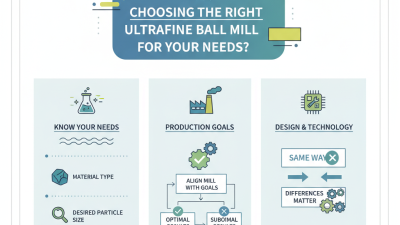
Understanding your specific needs is essential. Factors such as material type, desired fineness, and production capacity all play a role in selecting the best mill. A suitable Ultrafine Grinding Mill can enhance efficiency and yield, but selecting the wrong one may lead to inefficiencies and increased costs.
Additionally, consulting experts and examining product specifications is important. However, the abundance of options can be overwhelming. Potential buyers might feel uncertain about their choices. Reflecting on these challenges can highlight the need for thorough research and expert guidance in the decision-making process.
Types of Ultrafine Grinding Mills Available in the Market
When exploring ultrafine grinding mills, several types cater to varying needs. Jet mills are popular for their ability to produce extremely fine particles. They use high-velocity air streams to achieve this. These mills are effective but can be costly to operate. Another option is ball mills, known for their simplicity and versatility. They use balls to crush materials but may not achieve the same fineness as jet mills.
Impact mills are also widely used due to their efficiency. They work by using rotating hammers or blades to break down materials. Inline with their efficiency, these mills may produce more heat, which can affect some sensitive materials. Choosing the right mill depends on your specific requirements. Consider the material you’re grinding and the desired particle size.
Tips for selecting your mill include evaluating your material's properties. Some materials respond better to different grinding methods. Think about the end-use of your product as well. This could affect the type of grinding mill you choose. Remember to assess your budget, as operational costs can vary widely. Being informed about each type helps you make better decisions, leading to improved outcomes.
Ultrafine Grinding Mill Types and Their Average Particle Size Distribution
Key Features to Consider When Choosing an Ultrafine Grinding Mill
When selecting an ultrafine grinding mill, key features make a significant difference. Particle size reduction is central, as many applications require specific size distributions. According to industry reports, achieving targeting sizes below 10 microns is crucial for pharmaceutical and food industries. It's essential to consider the mill's ability to produce uniform fine particles consistently.
Another important feature is the energy efficiency of the grinding process. Effective mills minimize energy consumption while maximizing output. Data shows that energy-efficient mills can reduce operational costs by up to 30%. However, achieving high efficiency often depends on the technology used in the grinding process. Some mills may struggle with heat sensitivity, leading to unwanted alterations in material properties.
Additionally, maintenance efficiency cannot be overlooked. Regular upkeep is necessary to ensure optimal performance. Some ultrafine grinding mills require more frequent maintenance, which can disrupt production. This aspect is often underestimated but significant in long-term operational planning. Each choice comes with trade-offs that require careful consideration of individual processing needs, all while balancing cost and efficiency.
Applications of Ultrafine Grinding Mills in Various Industries
Ultrafine grinding mills play a crucial role across various industries. Their ability to produce extremely fine powders makes them essential in sectors like pharmaceuticals, food processing, and chemicals. In the pharmaceutical industry, for example, ultrafine grinding enhances drug absorption. Smaller particle sizes can lead to improved bioavailability, which is key for effective medication.
In the food industry, these mills help create consistent textures. Ingredients like flour and sugar must meet strict standards for quality. The precision of ultrafine grinding mills ensures that manufacturers achieve the desired particle size. This can impact flavors and final product performance. However, selecting the right mill can be challenging. Each application has specific requirements, and one size does not fit all.
The chemical industry also benefits from ultrafine grinding. Fine particles increase surface area, which enhances reactions, leading to better efficiency. Unfortunately, not all mills handle various materials well. Some might struggle with abrasive substances. This can lead to wear and tear, impacting long-term reliability. Choosing the best ultrafine grinding mill requires careful consideration of material properties and desired outcomes.
What is the Best Ultrafine Grinding Mill for Your Needs? - Applications of Ultrafine Grinding Mills in Various Industries
| Industry |
Application |
Material Processed |
Particle Size Range (µm) |
Typical Throughput (kg/h) |
| Pharmaceutical |
Active Pharmaceutical Ingredients |
Herbs, chemicals |
10-100 |
50 |
| Food |
Spices and Flavors |
Coffee, tea, spices |
20-200 |
200 |
| Cosmetics |
Pigment and Filler Manufacturing |
Titanium dioxide, zinc oxide |
5-50 |
30 |
| Chemical |
Industrial Chemicals |
Carbon black, silica |
1-100 |
100 |
| Minerals |
Mineral Processing |
Clay, talc |
10-100 |
150 |
Comparative Analysis of Popular Ultrafine Grinding Mill Brands
When selecting an ultrafine grinding mill, various brands offer different features and performance levels. A recent industry report indicates that the optimal particle size achievable plays a crucial role in determining efficiency. Brands that utilize advanced air classifier technology often achieve finer particle distribution. This aspect is vital, especially for pharmaceutical applications where consistency is paramount.
Another important factor is energy consumption. Data shows that some ultrafine mills can consume up to 30% less energy while maintaining output quality. Energy efficiency directly impacts operational costs, making it a priority for many manufacturers. Some mills can grind materials with a hardness of up to 7 Mohs while maintaining lower operational costs. Hence, users must assess their specific needs against the operational efficiencies of various models available.
The ease of maintenance and setup is another critical consideration. Certain models require more frequent servicing, impacting productivity. Feedback from industry professionals suggests that mills offering intuitive designs can significantly reduce downtime. These factors contribute to overall operational efficiency, making them vital in the decision-making process. As industries grow more competitive, evaluating these features becomes essential for optimizing production processes.
Maintenance Tips for Optimal Performance of Ultrafine Grinding Mills
Ultrafine grinding mills play a crucial role in various industries, from pharmaceuticals to food manufacturing. Regular maintenance is essential to ensure optimal performance. A report from the International Journal of Advanced Manufacturing Technology indicates that proper upkeep can enhance the lifespan of grinding equipment by up to 30%. This emphasizes the importance of adhering to a maintenance schedule.
One critical aspect of maintenance is lubrication. It is vital to keep grinding components well-lubricated to reduce friction. Insufficient lubrication can lead to increased wear and tear, compromising performance. Operators should check lubricant levels frequently and replace old lubricant according to the manufacturer's guidelines. Additionally, monitoring particle size distribution is significant. Fluctuations can indicate equipment issues, such as damaged blades or improper settings.
Cleaning is another often-overlooked aspect. Residue buildup can impact the efficiency of the mill, reducing output. A thorough cleaning routine should include removing any trapped materials and checking for corrosion or damage. Regular inspections can catch minor issues before they escalate. In many cases, neglecting these maintenance practices can lead to costly downtime, ultimately affecting production schedules and profitability.